
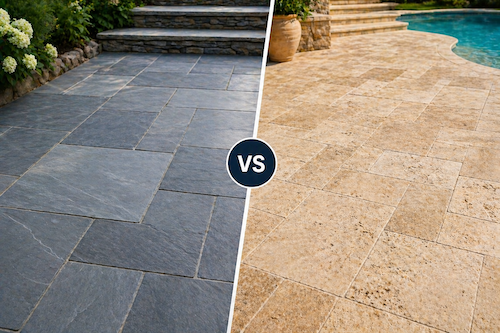
If you are planning a patio, pool deck, or outdoor walkway, you have probably come across this exact comparison. Bluestone or travertine.
At first glance, both look premium. Both are natural stone. Both can completely transform an outdoor space. But once you start digging deeper, the differences become much more important than appearance alone.
I have seen homeowners choose based on color and regret it later when maintenance or heat becomes an issue. On the other hand, when the right stone is chosen for the right environment, the result can last for decades.
So instead of just comparing features, let’s walk through how these two materials actually perform in real life.
To see more about the hardscape visit the post on this page HERE.
What Is Bluestone
Bluestone is a dense natural stone, typically a type of sandstone or limestone, known for its blue gray tones.
It is commonly used in patios, walkways, and steps because of its strength and classic appearance.
What Is Travertine
Travertine is a form of limestone formed by mineral deposits, often found in warm regions.
It has a lighter, more earthy look with shades of beige, cream, and tan. It is widely used in pool decks and outdoor living spaces.
Key Differences Between Bluestone and Travertine
1. Heat Resistance
This is one of the biggest deciding factors, especially in warm climates.
Travertine stays noticeably cooler under direct sunlight. That is why it is often used around pools.
Bluestone, on the other hand, absorbs more heat and can become hot to walk on during summer.
2. Durability
Bluestone is extremely dense and strong. It handles heavy traffic and harsh conditions very well.
Travertine is durable too, but slightly softer and more prone to surface wear over time.
3. Slip Resistance
Travertine naturally has a textured surface that provides good grip, even when wet.
Bluestone can also be slip resistant, especially in a natural cleft finish, but smoother finishes may become slippery.
4. Maintenance
Bluestone often requires sealing to protect against stains and weather damage.
Travertine also benefits from sealing, but many users find it easier to maintain over time.
5. Appearance
Bluestone offers a darker, more modern or classic look.
Travertine provides a warmer, more Mediterranean style that works well in outdoor living spaces.
Pros and Cons Comparison Table
Bluestone
| Pros | Cons |
|---|---|
| Extremely durable | Can get hot in sun |
| Strong and dense | Requires sealing |
| Classic appearance | Higher cost in some regions |
| Good for heavy traffic |
Travertine
| Pros | Cons |
|---|---|
| Stays cool underfoot | Softer than bluestone |
| Slip resistant surface | Can show wear over time |
| Attractive natural tones | Needs sealing |
| Ideal for pool areas |
Real User Feedback and Insights
When you look at real world feedback, patterns start to appear.
Bluestone feedback
Many users love the strength and long lasting performance of bluestone. It holds up well under heavy use and harsh weather. However, a common complaint is heat buildup, especially in hot climates.
Some homeowners also mention that sealing is necessary to keep it looking good over time.
Travertine feedback
Travertine gets a lot of positive feedback for comfort, especially around pools. People often mention how much cooler it feels compared to other stones.
On the downside, some users report minor chipping or wear in high traffic areas after several years.
Travertine |
|---|
 |
How to Choose Based on Your Project
Choose bluestone if:
- You need maximum durability
- Your area gets moderate climate conditions
- You prefer darker, modern tones
- The space will handle heavy traffic
Choose travertine if:
- You are building a pool deck
- You live in a hot climate
- Comfort underfoot is important
- You want a lighter, warmer look
How to Install and Use Properly
No matter which material you choose, proper installation makes a big difference.
Basic steps:
- Prepare a stable base with proper drainage
- Use appropriate bedding material such as sand or mortar
- Ensure even spacing and alignment
- Apply sealing after installation
- Maintain regularly with cleaning and resealing
Poor installation is one of the main reasons natural stone fails early.
Common Mistakes to Avoid
- Choosing based only on appearance
- Ignoring heat factor in warm climates
- Skipping sealing process
- Using the wrong base or installation method
- Not considering long term maintenance
Buying Considerations
Climate
Hot climates favor travertine due to its cooling properties.
Budget
Prices vary depending on location and availability.
Traffic level
Bluestone handles heavy traffic better.
Maintenance expectations
Both require sealing, but bluestone may need more attention.
Final Thoughts
There is no wrong choice between bluestone and travertine. It really comes down to how and where you plan to use it.
If durability and strength are your top priorities, bluestone is a solid choice that can handle almost anything.
If comfort, especially in hot weather, matters more, travertine is often the better option.
The best results come from matching the material to your environment, not just your design preference.
Disclaimer
This content is based on information from various sources and represents recommendations according to available data. Quality and correctness of products are the responsibility of manufacturers and sellers.
Leave a Reply