
Product Category:
Industrial Chemical – Epoxy Resins (Stone Processing & Fabrication)
Below is structured for affiliate + educational authority content.
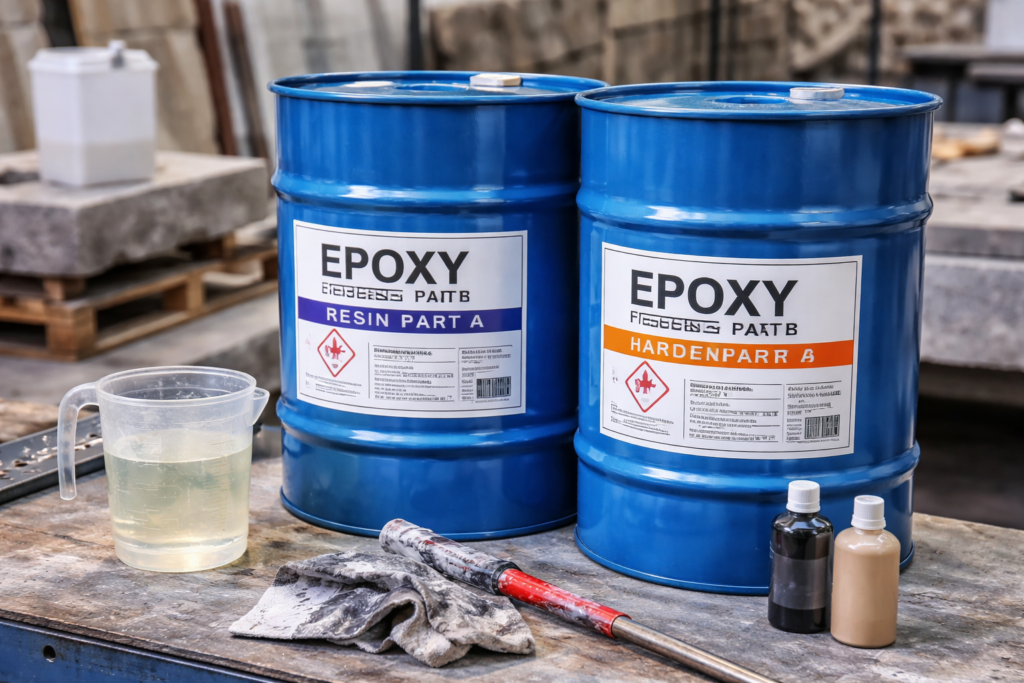
Epoxy Systems Used in Natural Stone Processing
Specifications:
- Product Type: Two-component epoxy resin system (Resin + Hardener)
- Mix Ratio: Typically 2:1 or 1:1 (varies by manufacturer)
- Viscosity Range: Low (penetrating) to high (structural bonding)
- Pot Life: 5–45 minutes depending on formula
- Full Cure Time: 8–24 hours (room temperature)
- Compressive Strength: 8,000–14,000 psi (cured)
- Tensile Strength: 3,000–7,000 psi
- VOC Content: Low to zero (industrial grade varies)
- Application Temperature Range: 50°F – 95°F typical
Specifications vary depending on type (penetrating, knife-grade, structural, UV-stable, etc.).
Chemical & Physical Characteristics:
Stone-processing epoxies are thermosetting polymers formed through a chemical reaction between epoxy resin (usually based on bisphenol-A or bisphenol-F) and a curing agent (amine or polyamide hardener).
Once cured, epoxy forms:
- High-strength cross-linked polymer network
- Strong adhesion to porous and non-porous stone
- Chemical-resistant surface
- Low shrinkage during curing
- High mechanical stability
Unlike polyester resins, epoxy offers superior bonding strength, moisture resistance, and structural reinforcement — making it preferred for premium stone fabrication.
Main Types of Epoxy Used in the Stone Industry
 Penetrating Epoxy (Low Viscosity)
Use:
- Reinforcing cracked slabs
- Filling micro-fractures
- Vacuum impregnation in factories
Key Features:
- Very low viscosity
- Deep penetration into pores
- Improves slab structural integrity
Pros:
- Strengthens weak marble or travertine
- Reduces slab breakage during cutting
- Minimal surface buildup
Cons:
- Requires controlled curing environment
- More expensive than polyester
 Knife-Grade Epoxy (Thick / Paste Type)
Use:
- Filling chips and edge repairs
- Surface crack repair
- Fabrication touch-ups
Key Features:
- High viscosity (non-sag)
- Can be tinted
- Easy to shape after partial cure
Pros:
- Excellent gap filling
- Strong adhesion
- Good color matching ability
Cons:
- Visible repair lines if poorly tinted
- Slower sanding compared to polyester fillers
 Structural Bonding Epoxy
Use:
- Laminating slabs
- Attaching reinforcement rods
- Miter joint bonding
- Countertop seams
Key Features:
- High tensile strength
- Low shrinkage
- Strong bond to polished surfaces
Pros:
- Superior seam strength
- Moisture resistant
- Long-term durability
Cons:
- Requires precise mixing
- Longer cure time
 UV-Stable / Outdoor Epoxy
Use:
- Exterior stone bonding
- Light-colored marble installations
- Outdoor cladding systems
Key Features:
- Yellowing-resistant formula
- Designed for sunlight exposure
Pros:
- Maintains clarity
- Better aesthetic stability outdoors
Cons:
- Higher cost
- Limited availability compared to standard epoxy
Advantages (Pros) of Epoxy in Stone Processing:
- Superior bonding strength compared to polyester
- Excellent moisture resistance
- Low shrinkage during cure
- High mechanical durability
- Enhances slab stability
- Better long-term performance in structural applications
Disadvantages (Cons):
- More expensive than polyester resin
- Sensitive to incorrect mix ratios
- Limited working time (pot life)
- Can yellow if not UV-stable
- Requires skilled handling
Positioning Summary:
Epoxy systems in the stone industry are best positioned as premium structural and repair solutions for professional fabrication and long-term durability. While costlier than polyester alternatives, they provide superior strength, moisture resistance, and performance — especially in high-value natural stone applications.
Leave a Reply