
Do you have slate stone in your home and worry about damaging it while cleaning?
Your concern is completely valid.
Although slate is known for its durability, resistance to temperature changes, and dense, hard-wearing structure, it is still a natural stone. Like all natural stones, it can react to certain cleaning products — especially acidic solutions. Over time, dust particles and stubborn stains can also damage its surface texture if not properly maintained.
That’s why learning the correct method for cleaning and sealing slate is essential. In this guide, we’ll walk you step by step through the proper way to clean and seal slate flooring so you can protect your investment with confidence.
Slate Stone | What You’ll Need
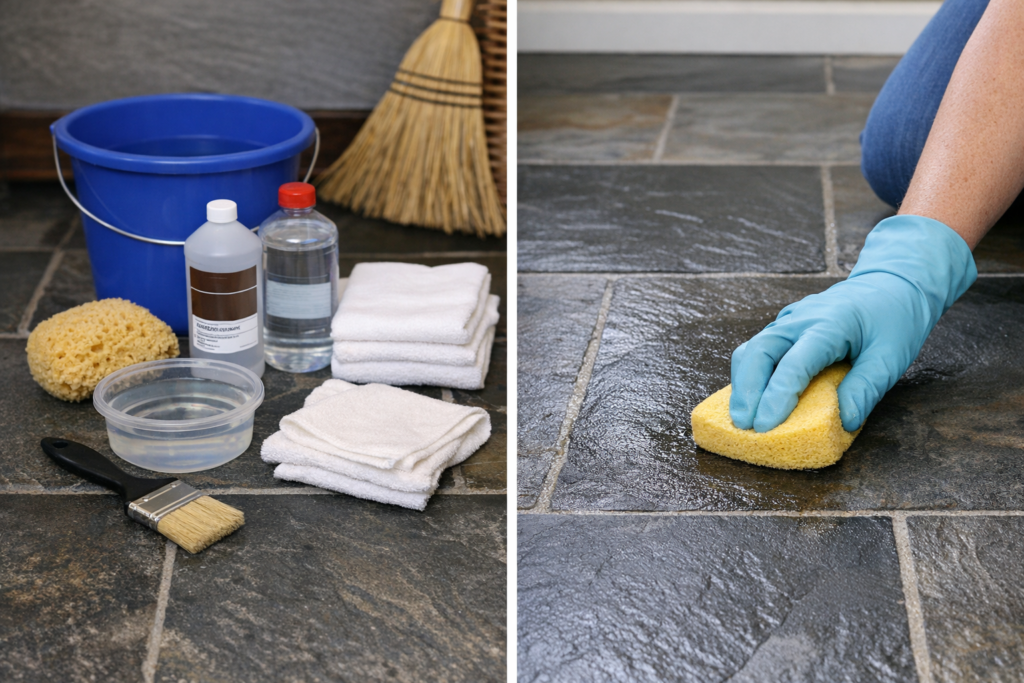
Before you begin, gather the necessary tools and materials:
Tools:
- Dry dust mop (washable and suitable for stone floors)
- Broom and dustpan
- Bucket
- Sponge
- Soft cotton cloths
- Shallow plastic container
Materials:
- Rubbing alcohol or hydrogen peroxide
- Slate sealer (penetrating sealer recommended)
Important:
Choose a sealer based on:
- The type and finish of your slate
- The appearance you want (natural vs. enhanced look)
- The amount of foot traffic the area receives
Step-by-Step: Cleaning and Sealing Slate
1. Remove Surface Dust Properly
Start by using a dry dust mop to remove all loose dirt and debris.
Avoid circular or back-and-forth motions. These movements tend to spread dust instead of collecting it.
Instead:
- Work in straight lines
- Start from one wall and move systematically toward the opposite side
- Clean one defined section at a time
This method ensures dust gathers in one area and can be easily removed without scratching the surface.
2. Wash the Slate Floor
After removing dust, wash the floor using clean water and a damp mop.
Do not leave excess water on the surface.
A few drops of mild detergent (fabric-safe or pH-neutral cleaner) can be used if needed.
Rinse thoroughly so no residue remains.
Important:
Avoid walking on the floor until it is completely dry.
3. Remove Stubborn Stains
If stains remain after basic washing, use one of the following methods:
Using Rubbing Alcohol
- Mix ½ cup rubbing alcohol with 250 ml (1 cup) water
- Soak a sponge in the solution
- Gently rub the stained area until the stain lifts
Using Hydrogen Peroxide
- Add a few drops of hydrogen peroxide to 250 ml water
- Apply using a sponge or cloth
- Lightly clean the stained area
Always test any solution on a small hidden area first.
Preparing Slate for Sealing
Slate floors do not need frequent sealing. Only reseal when the previous sealer has worn off.
Before applying a new sealer:
- Make sure all traces of the old sealer are removed
- Use an appropriate stone-safe stripping solution if necessary
The surface must be completely clean and dry before sealing.
How to Apply Sealer to Slate
- Ensure the floor is fully dry.
- Pour a small amount of penetrating sealer into a shallow plastic container.
(For natural stones like slate, penetrating sealers are generally better than surface sealers.)
- Dip a sponge or soft brush into the sealer.
- Apply evenly using circular or back-and-forth motions.
Make sure:
- All pores are covered
- Grout lines and joints are sealed thoroughly(These areas collect the most dirt and moisture.)
Allow the first coat to dry completely before applying the second coat.
Pro Tip
Before sealing the entire floor, test the sealer on a small, hidden section.
This allows you to evaluate the finish, absorption rate, and final appearance.
Product | Name | Features | Price |
|---|---|---|---|
 | Sealer-Color Enhancer |
| |
 | Sealer Spray – Granite, Stone |
|
Leave a Reply