
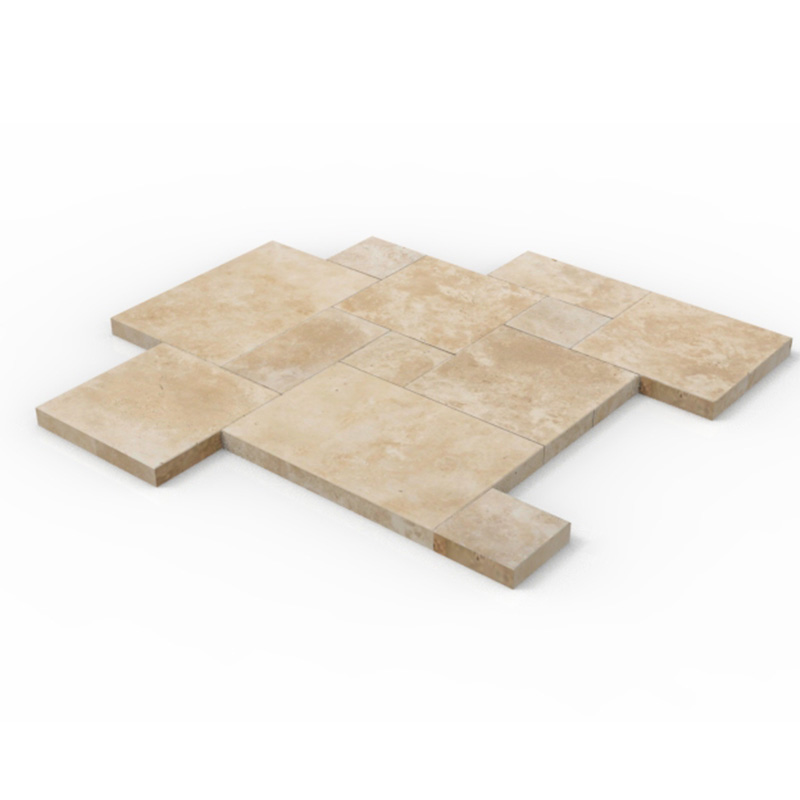
Product Category:
Natural Stone – Travertine (Exterior / Hardscape Use)
Specifications:
- Stone Type: Natural travertine (sedimentary limestone)
- Primary Color: Light ivory to cream with subtle movement
- Available Finishes (Exterior): Tumbled, brushed, honed, chiseled edge
- Standard Thickness (Pavers): 1 1/4” – 1 1/2” (30–40 mm typical)
- Common Sizes: 6×12, 12×12, 12×24, 16×24, French pattern sets
- Water Absorption: ~0.5% – 1.5%
- Density: ~145–155 lbs/ft³
- Compressive Strength: Approx. 8,000–12,000 psi
- Slip Resistance (Tumbled/Brushed): Good for pool deck use
Specifications may vary depending on quarry origin and manufacturer.
Chemical & Physical Characteristics:
Ivory Travertine is a form of limestone deposited by mineral springs. It is composed primarily of calcium carbonate (CaCO₃) and contains natural voids formed by gas bubbles during its creation.
Physical Properties:
- Naturally porous structure (voids may be filled or unfilled)
- Medium density stone
- Moderate compressive strength
- Softer than granite, harder than some marbles
- Sensitive to acidic substances
- Excellent thermal comfort properties
Performance in Hardscape:
Ivory travertine is widely used for:
- Pool decks
- Patios
- Walkways
- Driveways (light residential)
- Outdoor kitchens and entertainment areas
One of its strongest performance advantages is heat reflection. Even in hot climates, ivory travertine remains cooler under direct sunlight compared to concrete or darker pavers, making it highly desirable for barefoot areas.
Its porous structure allows slight moisture absorption, which can improve slip resistance in textured finishes. However, sealing is strongly recommended to reduce staining and moisture penetration.
Advantages (Pros):
- Stays cool under sun exposure (ideal for pool decks)
- Natural slip resistance in tumbled finish
- Timeless, neutral ivory tone
- Blends easily with multiple architectural styles
- Widely available and cost-effective compared to marble
- Easy to cut and install for contractors
Disadvantages (Cons):
- Naturally porous — requires sealing
- Can chip along edges if improperly handled
- Sensitive to acidic cleaners
- Color variation between batches
- Not ideal for heavy commercial vehicular traffic
Market Ideas:
Target Customer Segments:
- Homeowners installing new pool decks
- Florida / warm-climate residential projects
- Landscape designers focused on light, coastal aesthetics
- Contractors building outdoor living spaces
Affiliate Positioning Strategy:
- Position as “Best Natural Stone for Pool Decks”
- Compare Ivory Travertine vs. Concrete Pavers
- Create guides around sealing and maintenance products
- Bundle recommendations with pool coping, sealers, and installation tools
Positioning Summary:
Ivory Travertine is best positioned as a functional and aesthetic outdoor hardscape solution that balances beauty, comfort, and practicality. It is especially suited for warm climates and poolside environments where surface temperature and slip resistance are critical.
Leave a Reply