
Introduction
Quick answer: A Calacatta Viola marble slab is an Italian marble from the Apuan Alps near Carrara with an ivory to creamy white background and veins in purple, burgundy and mauve. It is rarer and harder to find than Calacatta Gold. It works best on vanities, feature walls, fireplaces and statement islands, and like every marble it etches from lemon, wine and vinegar.
Most white marbles have gray or gold veins. Calacatta Viola is the one with purple. The color comes from iron oxide and other trace minerals in the stone, and it can run from a soft lavender to a deep wine red on the same slab.
That color is why designers pick it for one strong piece in a room, like a powder room vanity or a fireplace, and pair it with plain white walls and brass or black fixtures. Below we cover its look, origin, where it works in a Florida home, how to care for it and what to expect on price. For a white marble with warmer gold veins, see our Calacatta Gold profile.
As an Amazon Associate, FloorHack earns from qualifying purchases.
What does Calacatta Viola marble look like?
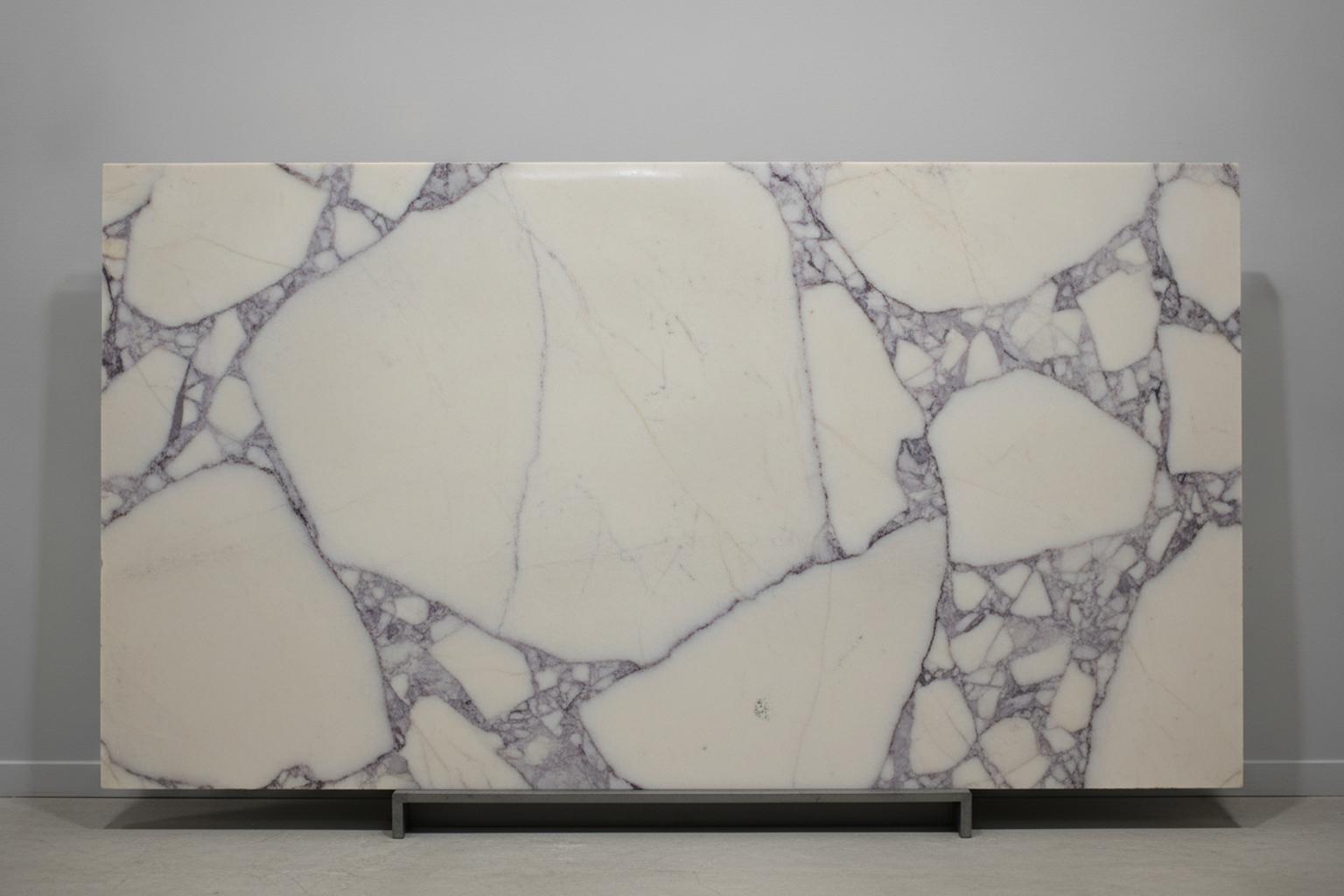
The background is ivory to creamy white. Purple veins cross it in thick and thin lines, often breaking the white into rounded or angular pieces, so the slab can look like a mosaic of white stones held together by purple. The veins range from violet and mauve to dark burgundy, sometimes with gray mixed in.
Slabs vary a lot. Some show large calm white areas with a few bold purple lines. Others are busy, with dense veining across the whole face. Choose your slabs in person, and look at them in daylight: the purple can read warmer or cooler depending on the light.
Origin and material type
Calacatta Viola comes from the Apuan Alps around Carrara in Tuscany, Italy. One Italian stone company says it is one of the best-known types of Calacatta Vagli marble and has been used since Roman times. Another describes it as historically famous in Florence because Cosimo de’ Medici used it, and it can still be seen in the Duomo of Florence, Palazzo Pitti and the Medici Chapels. Its deposits are limited, which is why it costs more than common white marbles.
It is a true marble, made mostly of calcite. That means it is softer than granite or quartzite, it scratches more easily, and acids leave dull etch marks on it. Sealing helps against stains but does not stop etching.
Where to use a Calacatta Viola marble slab
| Area | Good fit? |
|---|---|
| Bathroom vanities and powder rooms | Very good. Little acid and wear, and the color gets noticed. |
| Feature walls and fireplaces | Excellent. No food or foot traffic. |
| Kitchen islands | Possible if you accept etching. A honed finish hides marks better. |
| Floors | Small, low-traffic rooms only, honed for grip. Sand scratches polished marble. |
| Outdoor kitchens and pool areas | Not a good choice in South Florida. Sun, rain, pool chemicals and citrus wear down the surface, and polished marble is slippery when wet. |
Pros and cons of Calacatta Viola
Pros
| Pros | Why it matters |
|---|---|
| Purple veining | Gives a room one strong color piece without paint or tile. |
| Every slab is different | Your vanity or fireplace will not look like anyone else’s. |
| Long history of use | Used in Florentine buildings for centuries, so it suits classic and modern rooms. |
| Can be refreshed | Light etches can be polished out, and worn tops can be re-honed. |
Cons
| Cons | Why it matters |
|---|---|
| Etches from acids | Lemon, wine, vinegar and some cleaners leave dull spots, even on sealed stone. |
| Soft stone | Scratches from pots, grit and sand. |
| Hard to source | Limited supply makes matching extra slabs later difficult. |
| Bold color | Can be hard to match with patterned tile or strong wall colors. |
Finishes: polished or honed?
Polished Calacatta Viola has the deepest color and shine, and it is the usual choice for walls, fireplaces and vanities. Etch marks show clearly on it, though, because they break the gloss. Honed Calacatta Viola is matte and softer looking. It hides etching better and has more grip on floors, but it absorbs liquids faster, so it needs sealing more often.
What homeowners say
We did not find Houzz threads or review-site posts from owners of Calacatta Viola itself, so we cannot report owner experience for this stone. The feedback we have seen for other Calacatta marbles applies: owners on Houzz and on marble blogs most often mention etching in kitchens and say a honed finish makes it much less visible. Bathrooms and walls get far fewer complaints.
How to care for and seal Calacatta Viola
- Seal it after installation with a penetrating sealer made for natural stone, and reseal when water stops beading. Honed surfaces need it more often, often every 6 to 12 months.
- Clean it with a pH-neutral stone cleaner or mild soap and warm water. Skip vinegar, lemon, bleach and most bathroom sprays.
- Wipe spills quickly, especially wine, coffee, oil and citrus. In bathrooms, rinse off soap and toothpaste.
- Put perfume bottles and glasses on a tray or coaster.
- Buff light etches with a marble polishing powder and a soft cloth. Call a stone restoration pro for deeper marks.
Our post on using a stone and floor sealer properly has more application tips.
Products we use for marble care
These are penetrating sealers and a stone cleaner from our catalog. Test any product on an offcut or a hidden spot first, and follow the label for your finish.

Miracle Sealants 511 impregnator sealer
Penetrating sealer for granite, marble, travertine and tile. Soaks in to resist stains without changing the stone’s look.
Catalog #083
Check price on Amazon
StoneTech BulletProof sealer
StoneTech BulletProof penetrating sealer for natural stone, tile and grout. Helps resist water and oil stains.
Catalog #080
Check price on Amazon
Stone Kleen natural stone cleaner
Cleaner for natural stone surfaces like marble, granite and travertine.
Catalog #148
Check price on AmazonCalacatta Viola price
We did not find a reliable price range for Calacatta Viola slabs. The stone sellers we read describe it as scarce and priced medium to high, and harder to source than Calacatta Gold. Ask local fabricators for quotes on the exact slabs you pick, and include edge profile, cutouts and installation.
Look-alikes in porcelain and quartz
Several porcelain and quartz makers sell slabs with a Calacatta Viola look. Porcelain does not etch and needs no sealing, which makes it the easier choice for a busy kitchen or a whole bathroom floor. The trade-off is printed veining that repeats and lacks the depth of real stone. If you like a calm white marble instead, see our Statuario marble profile.
Frequently asked questions
What is the difference between Calacatta Viola and Calacatta Gold?
Both are Calacatta marbles from the Carrara area. Calacatta Gold has gray and gold veins on a bright white background. Calacatta Viola has purple, burgundy and mauve veins on an ivory background and is produced in smaller amounts.
Why is Calacatta Viola purple?
The purple veins come from iron oxide and other trace minerals that were trapped in the rock when it formed.
Is Calacatta Viola good for a kitchen?
It can be used on an island if you accept etching and some marks over time. A honed finish hides wear better. For a hard-working main counter, a quartzite or porcelain is easier to live with.
Is Calacatta Viola right for your home?
If you want one bold piece, like a powder room vanity, a fireplace or a feature wall, Calacatta Viola is a good pick, and polished shows its color best. If the stone will sit in a kitchen where you squeeze limes and pour wine every day, choose a honed slab and accept the marks, or use a Viola-look porcelain. Skip it for outdoor kitchens and pool areas in Florida.
Planning a bathroom, fireplace or kitchen with marble? Browse stone and porcelain on floorhack.com, or describe your project on FloorHack BID for a free estimate and one price from vetted South Florida contractors.
If you’d like to see more slab and tile posts, visit this category here.
As an Amazon Associate, FloorHack earns from qualifying purchases. Some links in this post are affiliate links; buying through them costs you nothing extra.
Disclaimer: This content is based on information from various sources and represents recommendations according to available data. Quality and correctness of products are the responsibility of manufacturers and sellers.
Leave a Reply