
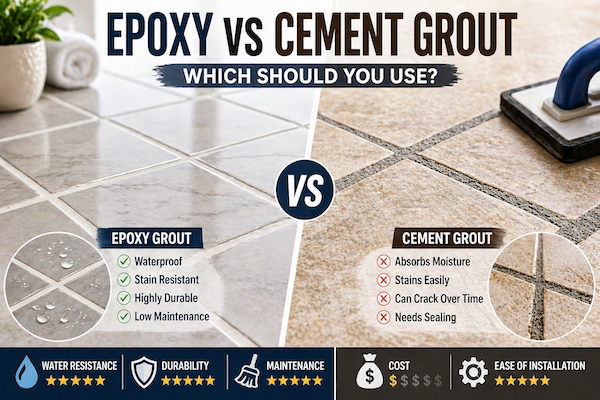
If you have ever installed tile or even just researched it, you have probably come across this question pretty quickly. Should you go with epoxy grout or stick with traditional cement grout?
At first, it sounds like a simple choice. But once you start digging into it, the differences become more important than most people expect.
I have seen projects where the wrong grout choice caused staining, cracking, or even complete rework. On the other hand, the right grout can make your tile installation look clean and last for years with almost no maintenance.
So instead of giving you a quick answer, I want to walk you through how each option actually performs in real situations. That way, you can choose based on your project, not just general advice.
To see more details about different chemicals in flooring, visit this page HERE.
What Is Cement Grout
Cement grout is the traditional option that has been used for decades. It is made from a mix of cement, sand, and water.
There are two main types:
- Sanded grout for wider joints
- Unsanded grout for narrow joints
It is affordable, widely available, and easy to work with.
Cement Mix Ready Grout |
|---|
 |
What Is Epoxy Grout
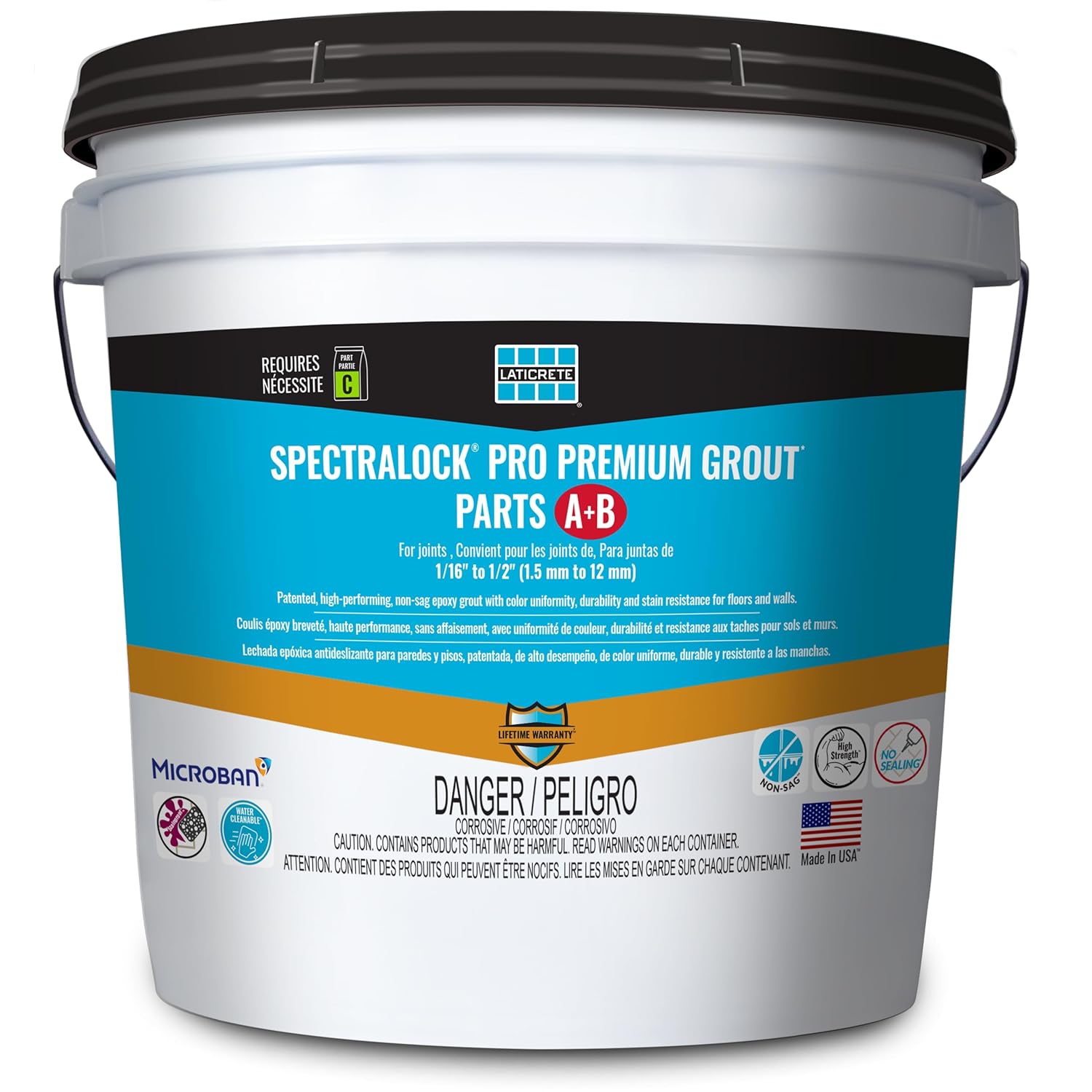
Epoxy grout is a newer, more advanced material made from epoxy resins and hardeners.
Instead of absorbing moisture like cement grout, it creates a non porous surface that resists stains and water.
It is often used in commercial kitchens, bathrooms, and high traffic areas.
Epoxy Grout |
|---|
 |
Key Differences Between Epoxy and Cement Grout
1. Water Resistance
Cement grout is porous. That means it absorbs water over time.
Epoxy grout is completely waterproof. Water sits on the surface instead of soaking in.
If you are working in a shower, outdoor space, or pool area, this difference matters a lot.
2. Durability
Cement grout can crack or wear over time, especially in high traffic areas.
Epoxy grout is much stronger and more flexible. It resists cracking and holds up better under stress.
3. Stain Resistance
This is one of the biggest reasons people switch to epoxy.
Cement grout stains easily from dirt, grease, and spills.
Epoxy grout resists staining, which makes it easier to maintain clean lines between tiles.
4. Ease of Installation
Cement grout is easier to install, especially for beginners.
Epoxy grout requires more precision. It sets faster and can be harder to clean during installation.
5. Cost
Cement grout is much more affordable.
Epoxy grout costs more upfront, sometimes significantly more.
Pros and Cons Comparison Table
Epoxy Grout
| Pros | Cons |
|---|---|
| Waterproof | Expensive |
| Stain resistant | Harder to install |
| Highly durable | Short working time |
| Low maintenance |
Cement Grout
| Pros | Cons |
|---|---|
| Affordable | Absorbs moisture |
| Easy to install | Stains easily |
| Widely available | Requires sealing |
| Good for simple projects |
Real User Feedback and Experience
When you look at real world feedback, the differences become even clearer.
What people say about epoxy grout
Many users who install epoxy grout say they would not go back to cement, especially in kitchens and bathrooms. They like how it stays clean and does not discolor over time.
However, there are also plenty of comments about installation difficulty. Some users mention that it sets quickly and can be messy if you are not prepared.
What people say about cement grout
Cement grout is still widely used because it is simple and affordable. Many DIY users prefer it because it is forgiving during installation.
But over time, users often complain about staining, cracking, and the need for sealing. In high moisture areas, maintenance becomes a regular task.
How to Choose the Right Grout for Your Project
Use epoxy grout if:
- You are working in a wet area like showers or pools
- You want low maintenance
- You need strong stain resistance
- You are okay with higher upfront cost
Use cement grout if:
- You are on a tight budget
- You are doing a simple or dry area project
- You prefer easier installation
- You are comfortable with sealing and maintenance
How to Apply Grout Properly
No matter which grout you choose, proper application is critical.
Basic steps:
- Mix the grout according to instructions
- Apply using a grout float at an angle
- Press grout into joints completely
- Remove excess grout from surface
- Clean tiles with damp sponge
- Allow proper curing time
With epoxy grout, timing is very important. You need to clean it before it fully sets, or it becomes difficult to remove.
Common Mistakes to Avoid
- Using cement grout in high moisture areas without sealing
- Waiting too long to clean epoxy grout
- Mixing grout incorrectly
- Applying grout to dirty or uneven joints
- Ignoring manufacturer instructions
Buying Considerations
Project type
Bathrooms, kitchens, and outdoor areas benefit more from epoxy.
Skill level
If you are a beginner, cement grout is easier to manage.
Budget
Epoxy costs more upfront but saves on maintenance.
Maintenance expectations
If you want something that stays clean with minimal effort, epoxy is a better choice.
Final
There is no one size fits all answer here. Both epoxy and cement grout have their place.
If you want durability, stain resistance, and low maintenance, epoxy grout is clearly the better option. It is especially worth it in wet or high traffic areas.
But if you are working on a simple project and want something affordable and easy to apply, cement grout still gets the job done.
The key is choosing based on your project conditions, not just the price tag.
Disclaimer
This content is based on information from various sources and represents recommendations according to available data. Quality and correctness of products are the responsibility of manufacturers and sellers.
Leave a Reply