
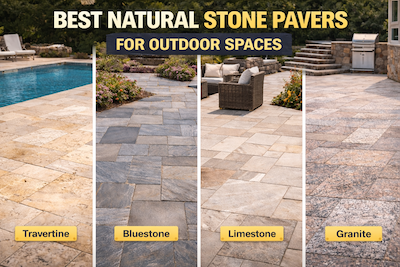
There is something about natural stone that concrete just cannot fully replicate. It feels solid, timeless, and a bit more connected to the environment around it. When you walk on a properly installed stone patio or driveway, you can tell immediately that it is built to last.
But here is the thing most people do not realize at the beginning. Not all natural stone pavers perform the same outdoors. Some handle heat better, some resist moisture better, and some simply age more gracefully over time.
I have seen homeowners pick stone based only on color or price, and a couple of years later they deal with fading, cracking, or constant maintenance. On the other hand, the right stone can last decades with very little effort.
In this guide, I will walk you through the best natural stone pavers for outdoor spaces, based on durability, real user experience, and how they actually perform in daily use.
To know more about the different hardscape you can check the following page HERE.
Why Choose Natural Stone Pavers
Natural stone is not just about appearance. It offers several practical benefits that make it a strong choice for outdoor projects.
Key advantages:
- Long lifespan compared to manufactured materials
- Natural resistance to weather and UV exposure
- Unique textures and colors
- Better heat performance in many cases
However, each type of stone behaves differently, which is why choosing the right one matters.
Best Natural Stone Pavers for Outdoor Use
1. Travertine Pavers
Travertine is one of the most popular choices, especially in warm climates.
It stays relatively cool underfoot and has a clean, modern look.
Pros and Cons
| Pros | Cons |
|---|---|
| Stays cool in heat | Requires sealing |
| Slip resistant surface | Can be porous |
| Elegant appearance | |
| Good for pool areas |
Real User Feedback
Homeowners often mention how comfortable travertine feels, even under strong sun. Many say it is perfect for pool decks and patios. The main concern is sealing, as unsealed travertine can absorb moisture and stain over time.
Travertine |
|---|
 |
2. Bluestone
Bluestone is known for its strength and natural variation in color.
It works well for patios, walkways, and even driveways.
Pros and Cons
| Pros | Cons |
|---|---|
| Very durable | Can get hot in sun |
| Natural textured surface | Higher cost |
| Handles heavy traffic | |
| Rich color tones |
Real User Feedback
Users appreciate the durability of bluestone. It holds up well under heavy use and weather changes. Some mention that darker tones can absorb heat, making it warmer in hot climates.
3. Limestone
Limestone offers a softer, more uniform look compared to other stones.
Pros and Cons
| Pros | Cons |
|---|---|
| Clean and consistent look | Softer than other stones |
| Comfortable underfoot | Can wear over time |
| Good for patios | |
| Light color options |
Real User Feedback
Many homeowners choose limestone for its appearance. It creates a clean and bright outdoor space. However, some users note that it may wear faster in high traffic areas compared to harder stones.
4. Granite Pavers
Granite is one of the toughest natural stones available.
Pros and Cons
| Pros | Cons |
|---|---|
| Extremely durable | Expensive |
| Scratch and stain resistant | Harder to install |
| Long lifespan | |
| Low maintenance |
Real User Feedback
Users consistently highlight granite for its strength. It performs very well in driveways and high traffic areas. The main downside mentioned is cost, but many say it is worth it for long term durability.
5. Sandstone
Sandstone offers warm, natural tones that work well in landscaping designs.
Pros and Cons
| Pros | Cons |
|---|---|
| Natural warm colors | More porous |
| Good grip surface | Needs sealing |
| Easy to cut and shape | |
| Affordable compared to some stones |
Real User Feedback
Users like sandstone for its natural appearance and affordability. However, many mention that sealing is important to prevent water damage and staining.
How to Install Natural Stone Pavers Properly
Installation plays a big role in how well stone performs outdoors.
Basic steps:
- Prepare and compact the base
- Add a layer of sand or mortar
- Lay the stones evenly
- Fill joints with sand or grout
- Compact and seal if required
Proper drainage is critical. Without it, even the best stone can shift or settle over time.
Buying Guide: What to Consider
Climate
In hot areas, choose stones that stay cooler like travertine.
Traffic level
For driveways or heavy use, granite or bluestone is a better choice.
Maintenance
Some stones require sealing, while others are more low maintenance.
Budget
Natural stone varies widely in price. Balance upfront cost with long term performance.
Design style
Each stone has a unique look. Choose one that fits your outdoor space.
Common Mistakes to Avoid
- Choosing stone based only on appearance
- Skipping sealing when required
- Poor base preparation
- Ignoring drainage
- Using softer stones in high traffic areas
Final Thoughts
Natural stone pavers are one of the best investments you can make for an outdoor space. They bring both durability and character that is hard to match.
If you want something cool and comfortable, travertine is a great choice. For strength and long term durability, granite and bluestone stand out. Limestone and sandstone offer beautiful looks but require a bit more attention.
At the end of the day, the best stone is the one that matches your environment, usage, and maintenance expectations.
Disclaimer
This content is based on information from various sources and represents recommendations according to available data. Quality and correctness of products are the responsibility of manufacturers and sellers.
Leave a Reply