
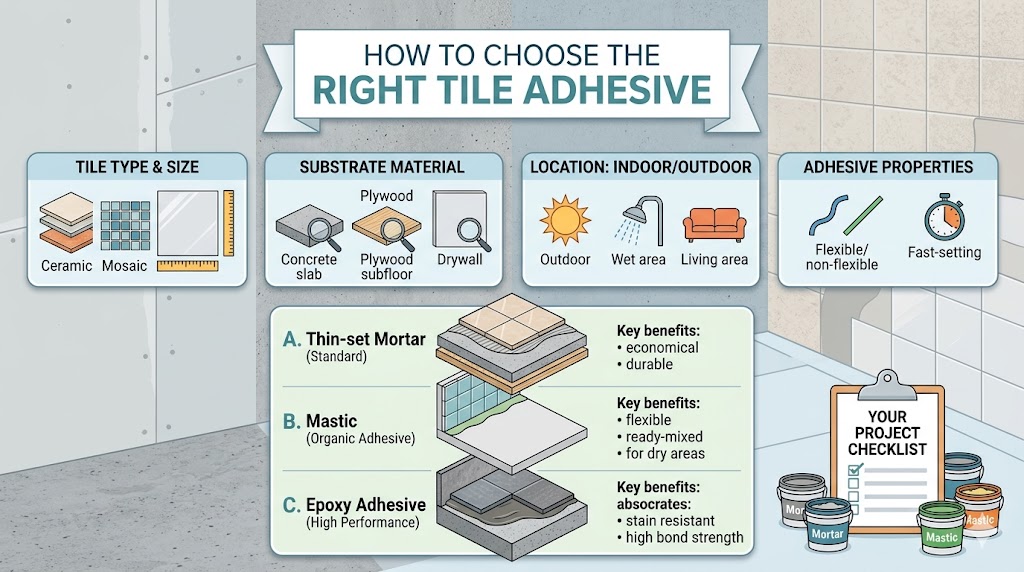
Picking tile is usually the fun part of a renovation. Choosing the adhesive underneath it is where many homeowners get confused.
At first glance, tile adhesive seems simple. You grab a bag or bucket from the store, spread it on the surface, and install the tiles. But the truth is, the adhesive plays a huge role in how long your tile lasts. The wrong product can lead to cracked grout, loose tiles, hollow spots, or even water damage behind walls.
That is why professional installers spend so much time matching the adhesive to the tile type, installation area, moisture exposure, and subfloor material.
If you are renovating a bathroom, laying porcelain tile on a patio, or installing a kitchen backsplash, this guide will help you understand how to choose the right tile adhesive without overcomplicating the process.
To learn more about chemicals see this page HERE.
Why Tile Adhesive Matters More Than Most People Think
Tile adhesive is not just glue. It is the bonding layer that keeps tile stable under movement, moisture, temperature changes, and daily wear.
Modern tile installations rely heavily on polymer-modified adhesives because today’s tiles are larger, heavier, and denser than older ceramic options.
A cheap or incorrect adhesive may initially hold the tile in place, but over time problems often show up, including:
- Tile lifting or popping
- Cracked grout joints
- Water penetration
- Uneven tile surfaces
- Weak bonding on vertical installations
- Failure in outdoor freeze-thaw conditions
Professional tile contractors often say the installation is only as strong as the preparation and adhesive beneath it.
Main Types of Tile Adhesive
Before choosing a product, it helps to understand the basic categories.
Cement-Based Tile Adhesive
This is the most common option for floors and walls. It usually comes as a dry powder mixed with water or latex additive.
Best for:
- Porcelain tiles
- Ceramic tiles
- Floors
- Bathrooms
- Outdoor applications
Advantages:
- Strong bond strength
- Moisture resistant
- Affordable
- Works with large-format tiles
Limitations:
- Requires mixing
- Limited working time
- Can be messy for beginners
Adhesives |
|---|
 |
Premixed Tile Adhesive
Premixed adhesive comes ready to use in buckets. It is popular among DIY users because it is convenient.
Best for:
- Small wall tiles
- Kitchen backsplashes
- Dry indoor areas
Advantages:
- Easy application
- No mixing required
- Cleaner for beginners
Limitations:
- Not ideal for heavy tiles
- Poor performance in wet areas
- Longer curing time
Many professional installers avoid premixed mastics for showers and flooring because moisture exposure can weaken the bond over time.
Adhesives |
|---|
 |
Epoxy Tile Adhesive
Epoxy adhesive is highly durable and chemical resistant.
Best for:
- Commercial kitchens
- Industrial environments
- Swimming pools
- Areas exposed to chemicals
Advantages:
- Extremely strong
- Waterproof
- Chemical resistant
- Excellent durability
Limitations:
- Expensive
- Difficult to work with
- Short working time
For most residential projects, epoxy is unnecessary unless you need maximum water or stain resistance.
How to Match Adhesive to Tile Type
Different tiles require different bonding strength.
Ceramic Tile
Ceramic is lighter and more porous than porcelain, making it easier to bond.
Most standard cement-based adhesives work well for ceramic wall and floor tiles.
Porcelain Tile
Porcelain is dense and absorbs very little water. That makes it harder for adhesives to grip properly.
For porcelain, look for:
- Polymer-modified thin-set
- High-bond-strength adhesive
- Products labeled specifically for porcelain tile
Many tile failures happen because installers use standard adhesive designed for ceramic tile only.
Natural Stone Tile
Stone tiles like marble, granite, slate, and travertine are heavier and sometimes moisture sensitive.
Recommended adhesive features:
- Non-sag formula for walls
- White thin-set for light stone
- Medium-bed mortar for large stone tiles
White adhesive helps prevent staining or discoloration under lighter stone materials.
Choosing Adhesive Based on Installation Area
This is one of the biggest factors people overlook.
Bathroom and Shower Areas
Bathrooms deal with constant humidity and water exposure.
Use:
- Waterproof cement-based adhesive
- Polymer-modified thin-set
- Mold and moisture-resistant products
Avoid:
- Cheap premixed mastics inside showers
Real-world user reviews often mention that shower tile failures are commonly linked to incorrect adhesive choice rather than tile quality itself.
Kitchen Floors
Kitchen floors experience heavy foot traffic, dropped cookware, and temperature changes.
Recommended:
- Flexible thin-set mortar
- High-compression-strength adhesive
If the subfloor has slight movement, flexibility becomes extremely important.
Kitchen Backsplashes
This is one place where premixed adhesive can work well.
Since backsplashes have:
- Small tiles
- Minimal moisture
- Limited weight load
A quality premixed mastic is often enough for DIY projects.
Outdoor Tile Installations
Outdoor installations are the most demanding.
Use adhesives that are:
- Frost resistant
- Waterproof
- Flexible
- Rated for exterior use
Outdoor patios experience expansion and contraction from weather changes. Rigid adhesive often fails in these conditions.
Understanding Thin-Set vs Mastic
This is probably the most searched tile adhesive question online.
| Feature | Thin-Set Mortar | Mastic Adhesive |
|---|---|---|
| Water Resistance | Excellent | Moderate |
| Best Use | Floors and wet areas | Dry wall areas |
| Strength | High | Medium |
| Mixing Required | Yes | No |
| Outdoor Use | Yes | No |
| Large Tiles | Yes | Limited |
| DIY Friendly | Moderate | Easy |
For most flooring projects, professionals still strongly prefer thin-set mortar.
Sanded vs Unsanded Adhesive Systems
Technically, sanding is more associated with grout, but some medium-bed mortars contain coarse aggregates for thicker tile support.
Large-format tiles often benefit from medium-bed mortar because it:
- Prevents tile sinking
- Improves leveling
- Supports heavier material
This has become increasingly important as oversized porcelain slabs grow more popular in modern homes.
Important Features to Look For
Flexibility
Flexible adhesive helps absorb slight movement in:
- Wood subfloors
- Heated floors
- Outdoor patios
Without flexibility, cracking becomes more likely.
Non-Slip or Non-Sag Performance
For wall tile installation, especially vertical surfaces, non-sag adhesive prevents tiles from sliding downward during installation.
This becomes essential with:
- Large subway tiles
- Stone wall panels
- Heavy porcelain wall tiles
Open Time
Open time refers to how long the adhesive remains workable after spreading.
Longer open time helps beginners because it gives more adjustment time before tiles lock into place.
Rapid Set Formula
Rapid-set adhesives cure faster, which helps:
- Commercial projects
- Quick bathroom renovations
- Cold weather installations
But beginners may struggle because working time is shorter.
Common Tile Adhesive Mistakes
Using Wall Adhesive on Floors
Wall mastics are not designed for floor pressure and movement.
This is one of the most common DIY failures mentioned across contractor forums and customer reviews.
Ignoring Tile Size
Large-format tiles need stronger bonding support and better coverage.
Many modern tiles require:
- Back buttering
- Medium-bed mortar
- Larger notch trowels
Installing Over Improper Surfaces
Even the best adhesive cannot compensate for:
- Dusty surfaces
- Unstable subfloors
- Moisture-damaged plywood
- Uneven concrete
Surface preparation matters just as much as adhesive quality.
Using Too Much Water During Mixing
Overwatering weakens cement-based adhesive and reduces bond strength.
Always follow manufacturer mixing ratios carefully.
What Real Users Usually Say About Tile Adhesives
After analyzing homeowner reviews, contractor discussions, and renovation forums, a few patterns consistently appear.
Positive Feedback Usually Focuses On:
- Easy spreadability
- Strong initial grab
- Long working time
- Smooth mixing consistency
- Reliable bonding with porcelain tile
Users also appreciate products that reduce tile slipping on walls.
Negative Reviews Commonly Mention:
- Adhesive drying too quickly
- Weak bonding on porcelain
- Crumbling after curing
- Difficult cleanup
- Incorrect use in wet areas
Interestingly, many negative reviews are actually caused by application mistakes rather than product defects.
For example:
- Wrong trowel size
- Poor surface prep
- Incorrect water ratio
- Installing over painted surfaces
Professional installers repeatedly stress that technique matters as much as the adhesive itself.
Pros and Cons of Modern Tile Adhesives
| Pros | Cons |
|---|---|
| Stronger bonding than older mortar methods | Premium products can be expensive |
| Better moisture resistance | Some formulas require precise mixing |
| Flexible options for movement areas | Fast-setting types can be difficult for beginners |
| Suitable for large-format tiles | Surface preparation still critical |
| Available for indoor and outdoor use | Wrong adhesive choice can cause major failure |
Buying Guide: How to Choose the Right Tile Adhesive
Here are the main things worth checking before buying.
1. Tile Material
Porcelain, ceramic, and stone all have different bonding requirements.
Always confirm compatibility on the packaging.
2. Installation Location
Ask yourself:
- Is it indoors or outdoors?
- Wet or dry area?
- Floor or wall?
- Heated floor system?
These conditions determine flexibility and moisture requirements.
3. Tile Size
Larger tiles generally require:
- Stronger adhesive
- Better coverage
- Medium-bed mortar
4. Drying Time
DIY users often prefer standard-setting products because they allow more adjustment time.
Rapid-set formulas are better for experienced installers.
5. Subfloor Type
Concrete, cement board, plywood, and existing tile all require different approaches.
Some adhesives are specifically designed for difficult substrates.
Best Situations for Different Adhesive Types
| Project Type | Recommended Adhesive |
|---|---|
| Bathroom Shower | Polymer-modified thin-set |
| Kitchen Backsplash | Premixed mastic |
| Outdoor Patio | Exterior-rated flexible thin-set |
| Large Porcelain Tile | Medium-bed mortar |
| Natural Stone | White polymer-modified mortar |
| Heated Floors | Flexible thin-set |
Is Expensive Tile Adhesive Worth It?
In many cases, yes.
The price difference between budget and premium adhesive is usually small compared to the total renovation cost.
When tile installation fails, repairs become expensive because removing tile often damages:
- Waterproofing
- Backer boards
- Surrounding grout
- Adjacent tiles
Paying slightly more for reliable adhesive is often cheaper long term.
Final Thoughts
Choosing the right tile adhesive is really about matching the product to the environment, tile type, and installation conditions.
For most homeowners, polymer-modified thin-set mortar remains the safest all-around choice because it offers strong bonding, moisture resistance, and flexibility.
If you are working in a wet area, using large-format porcelain tile, or installing outdoor pavers, avoid cutting corners with cheap adhesive. The material underneath the tile matters just as much as the tile itself.
A little extra research before installation can save years of frustration later.
Disclaimer
This content is based on information from various sources and represents recommendations according to available data. Quality and correctness of products are the responsibility of manufacturers and sellers.
Leave a Reply