
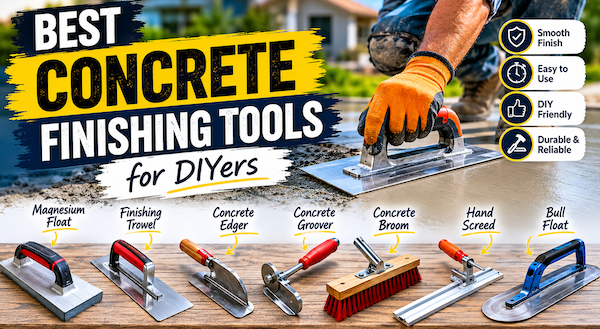
Concrete work can be incredibly satisfying when everything goes right. You pour the slab, level the surface, smooth it out, and a few days later you have a patio, walkway, shed floor, or driveway extension that looks professionally finished.
However, many DIY concrete projects fail for one simple reason: the wrong finishing tools.
Most beginners focus on the concrete mix itself and underestimate the importance of proper finishing equipment. In reality, even high-quality concrete can end up with rough surfaces, uneven textures, and visible defects if the finishing process is rushed or performed with inadequate tools.
The good news is that you do not need a truck full of contractor-grade equipment to achieve impressive results. With a handful of carefully selected concrete finishing tools and a basic understanding of when to use them, most homeowners can complete small-to-medium concrete projects successfully.
In this guide, we will look at the best concrete finishing tools for DIYers, explain what each one does, discuss real user feedback, and help you decide which tools deserve a place in your toolbox.
If you need more information about the tools in flooring, please check this page HERE.
Why Concrete Finishing Matters
Pouring concrete is only the beginning.
The finishing stage determines:
- Surface smoothness
- Appearance
- Slip resistance
- Crack control
- Long-term durability
Poor finishing can lead to:
- Surface scaling
- Uneven textures
- Premature cracking
- Standing water
- Reduced lifespan
Professional contractors often say concrete is easy to pour but difficult to finish properly. Fortunately, the right tools make the process much easier.
Essential Concrete Finishing Tools Every DIYer Should Own
1. Magnesium Float
A magnesium float is often the first finishing tool used after screeding.
Its purpose is to smooth the surface while bringing fine cement paste to the top.
Why DIYers Like It
Magnesium floats are lightweight compared to traditional wood floats and are easier to control for beginners.
Best Uses
- Sidewalks
- Patios
- Shed slabs
- Small driveways
Advantages
- Lightweight
- Durable
- Easy to handle
- Creates smooth surface preparation
Drawbacks
- Can create overly smooth surfaces if overused
- Less forgiving on very wet concrete
User Feedback Analysis
Many homeowners mention that switching from a wood float to a magnesium float noticeably improved their finishing results. Users frequently praise the reduced arm fatigue during larger pours.
Tools |
|---|
 |
2. Concrete Edger
An edger creates rounded edges along the perimeter of concrete slabs.
Although some DIYers skip this step, it significantly improves both appearance and durability.
Benefits
- Prevents edge chipping
- Creates professional appearance
- Reduces cracking near corners
Ideal Projects
- Walkways
- Patios
- Garage floors
- Driveway extensions
User Feedback Analysis
Many reviewers note that inexpensive edgers work surprisingly well. The biggest complaint is choosing an edge radius that is too large or too small for the slab thickness.
Tools |
|---|
 |
3. Concrete Groover
Groovers create control joints.
These joints encourage concrete to crack in predetermined locations rather than randomly.
Benefits
- Controls cracking
- Improves appearance
- Increases slab longevity
Best For
- Sidewalks
- Patios
- Driveways
- Large slabs
User Feedback Analysis
Homeowners often mention that control joints are one of the most overlooked parts of DIY concrete projects. Many experienced users report regretting skipping them on earlier projects.
Tools |
|---|
 |
4. Finishing Trowel
A finishing trowel creates the final smooth surface after floating.
Most DIYers choose stainless steel models because they resist rust and are easy to clean.
Advantages
- Smooth finish
- Professional appearance
- Long service life
Drawbacks
- Requires practice
- Over-troweling may weaken the surface
User Feedback Analysis
Beginners commonly report leaving trowel marks initially. After a few practice runs, most users find it becomes one of the most valuable finishing tools they own.
Tools |
|---|
 |
5. Concrete Broom
If you have ever walked on a public sidewalk, you have probably seen a broom finish.
After floating and troweling, a specialized concrete broom creates small grooves that improve traction.
Advantages
- Better slip resistance
- Simple to use
- Affordable
Recommended For
- Sidewalks
- Pool decks
- Patios
- Driveways
User Feedback Analysis
Users consistently appreciate the added safety during rainy conditions. Many homeowners report that a broom finish hides small finishing imperfections better than a polished surface.
Tools |
|---|
 |
6. Hand Screed
Before finishing begins, concrete must be leveled.
A screed helps remove excess concrete and establishes the slab’s final height.
Benefits
- Creates level surface
- Essential for drainage
- Improves finishing quality
User Feedback Analysis
Many DIYers note that a good screed is one of the most important tools in the entire process because every finishing step depends on proper leveling.
Tools |
|---|
 |
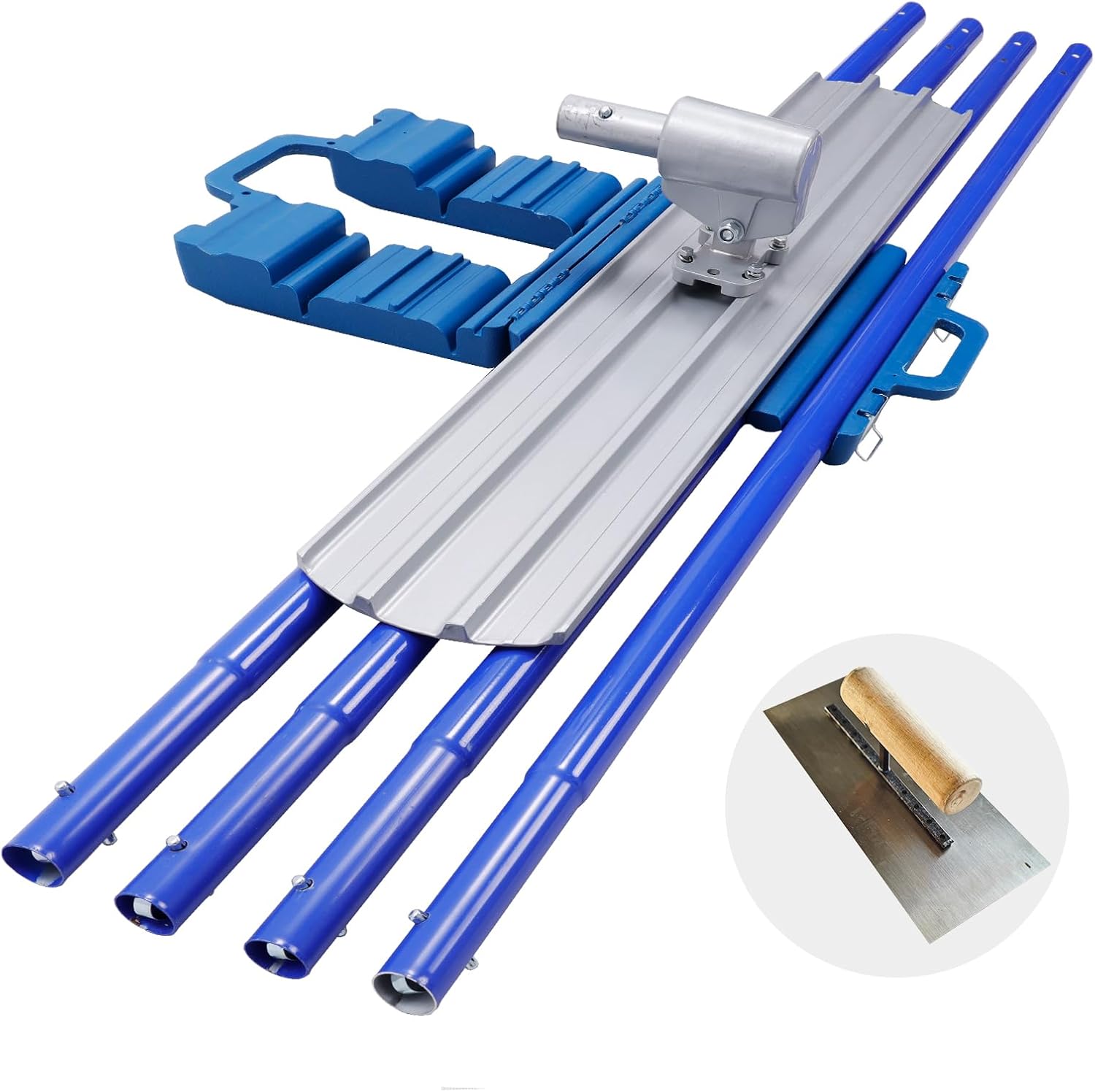
7. Bull Float
A bull float performs many of the same functions as a hand float but covers much larger areas.
Best For
- Large patios
- Garage floors
- Driveways
Benefits
- Faster finishing
- Reduces kneeling
- Covers large areas efficiently
User Feedback Analysis
Users frequently mention that bull floats dramatically reduce labor on larger pours. However, many agree that they are unnecessary for very small projects.
Tools |
|---|
 |
Pros and Cons of Concrete Finishing Tools
| Pros | Cons |
|---|---|
| Improve surface quality | Initial investment required |
| Reduce finishing errors | Learning curve for beginners |
| Increase project durability | Some tools are project-specific |
| Help prevent cracking | Larger tools require storage space |
| Create professional appearance | Improper use can damage finish |
| Save time during finishing | Quality tools cost more upfront |
How to Use Concrete Finishing Tools Properly
Having the right tools is only part of the equation.
Timing matters just as much.
Step 1: Screed the Concrete
Immediately after placement:
- Remove excess material
- Establish grade
- Check drainage slope
Step 2: Use a Bull Float
Before bleed water appears:
- Smooth high spots
- Fill low areas
- Level aggregate
Avoid excessive passes.
Step 3: Wait for Bleed Water
This is where many beginners make mistakes.
Do not begin troweling while water remains on the surface.
Wait until excess moisture evaporates naturally.
Step 4: Use a Magnesium Float
Once the surface begins to stiffen:
- Smooth imperfections
- Consolidate surface material
- Prepare for final finishing
Step 5: Cut Control Joints
Use a groover to establish crack-control lines.
General rule:
Joint spacing should be approximately 24 to 30 times slab thickness.
Step 6: Edge the Slab
Create rounded borders around exposed edges.
This reduces future damage and improves appearance.
Step 7: Apply Final Texture
Choose either:
- Smooth trowel finish
- Broom finish
- Decorative texture
The finish should match the intended use of the slab.
What Real DIYers Say About Concrete Finishing Tools
After reviewing homeowner forums, construction communities, contractor discussions, and online product reviews, several patterns emerge.
Most Appreciated Features
Users consistently praise:
- Comfortable handles
- Lightweight construction
- Easy cleaning
- Stainless steel durability
- Quality edge finishing
Magnesium floats and stainless-steel trowels receive particularly strong feedback.
Common Complaints
Negative reviews typically involve:
- Poor-quality handles loosening
- Cheap rivets failing
- Thin metal bending
- Tool rusting after storage
Many experienced users recommend buying mid-range professional-grade tools rather than the absolute cheapest options available.
Lessons Learned From Experienced DIYers
Many homeowners who complete multiple projects report similar advice:
- Invest in a good float.
- Never skip control joints.
- Clean tools immediately after use.
- Avoid overworking the surface.
- Practice on a small slab first.
These tips appear repeatedly across user discussions and project journals.
Buying Guide: How to Choose Concrete Finishing Tools
Consider Project Size
Small projects may only require:
- Magnesium float
- Edger
- Groover
- Trowel
Larger projects often benefit from:
- Bull float
- Long-handle accessories
- Professional screeding tools
Look for Durable Materials
The best materials include:
- Magnesium
- Stainless steel
- Heavy-duty aluminum
Avoid extremely thin metal tools that may bend during use.
Check Handle Comfort
Concrete finishing can be physically demanding.
Comfortable handles reduce fatigue and improve control.
Look for:
- Ergonomic grips
- Soft-touch handles
- Balanced weight distribution
Evaluate Tool Maintenance
Some tools require little maintenance beyond cleaning.
Others may need:
- Rust prevention
- Blade protection
- Handle tightening
Stainless steel generally offers the easiest long-term ownership experience.
Are Professional-Grade Tools Worth It?
For occasional DIY projects, mid-range tools often provide the best value.
Professional contractors may use premium equipment daily, but homeowners typically need durability without excessive cost.
Many experienced DIYers report that spending slightly more on a quality float, trowel, and edger results in noticeably better finishes and longer tool life.
In most cases, buying one quality tool once is cheaper than replacing low-cost versions repeatedly.
Recommended Tool Kit for Most DIYers
If you are building your first concrete finishing kit, consider starting with:
- Magnesium float
- Stainless steel finishing trowel
- Concrete edger
- Concrete groover
- Concrete broom
- Hand screed
This combination covers the majority of residential concrete projects without overwhelming your budget.
Final Thoughts
The best concrete finishing tools for DIYers are not necessarily the most expensive ones. Instead, they are the tools that help you work efficiently, create a smooth surface, and avoid common finishing mistakes.
For most homeowners, a magnesium float, quality trowel, edger, groover, and broom will handle nearly every residential concrete project. As your experience grows, you can add specialized tools such as bull floats and decorative finishing equipment.
Concrete finishing is part skill and part timing. The right tools cannot replace practice, but they can dramatically improve your results and make the learning process much easier.
Whether you are pouring a backyard patio, repairing a walkway, or building a shed foundation, investing in quality finishing tools is one of the smartest decisions you can make.
Disclaimer
This content is based on information from various sources and represents recommendations according to available data. Quality and correctness of products are the responsibility of manufacturers and sellers.
Leave a Reply