
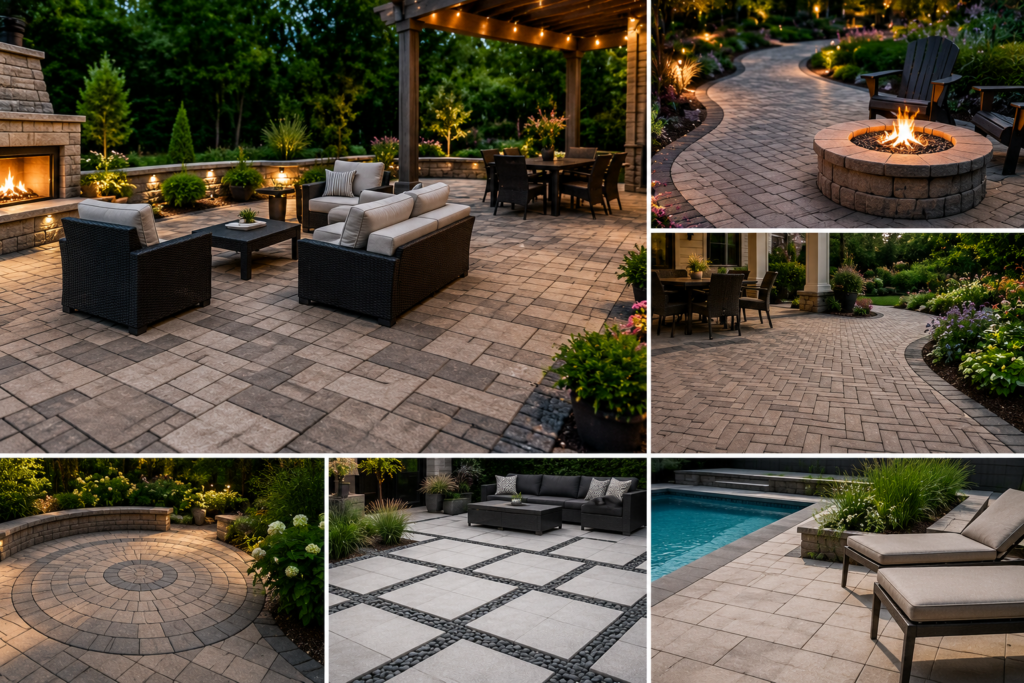
A well-designed patio can completely change how you use your outdoor space. It can become a place for family dinners, weekend barbecues, morning coffee, or simply a quiet spot to unwind after a long day. While there are many materials available for building patios, pavers continue to be one of the most popular choices for homeowners, and for good reason.
Pavers offer durability, flexibility, attractive design options, and relatively straightforward installation compared to poured concrete. More importantly, they allow homeowners to create a custom outdoor living space that reflects their style without requiring a complete backyard overhaul.
If you’re planning a new patio or thinking about upgrading an existing one, this guide will walk you through some of the most popular patio design ideas using pavers, practical installation tips, real homeowner feedback, and important buying considerations.
to have more idea about different titles for interior and exterior check this page topics HERE.
Why Pavers Remain a Top Choice for Patios
Walk through almost any newly landscaped neighborhood, and you’ll notice one thing: pavers are everywhere.
Homeowners consistently choose pavers because they offer several advantages over poured concrete and wooden decks.
Some key benefits include:
- Long lifespan
- Easy repairs
- Wide range of colors and textures
- Improved drainage options
- Enhanced curb appeal
- Better resistance to cracking
Unlike concrete slabs, individual pavers can often be replaced if damaged, making maintenance simpler over the long term.
Popular Patio Design Ideas Using Pavers
Modern Large Format Paver Patio
One of the strongest trends in recent years is the use of large-format pavers.
These oversized pavers create a clean, contemporary appearance that works particularly well with modern homes.
Why Homeowners Love It
Large pavers create fewer visible joints, resulting in a sleek and uncluttered look. They also help smaller patios appear larger.
Best Pairings
- Minimalist furniture
- Linear fire pits
- Black aluminum pergolas
- Modern outdoor kitchens
Potential Drawbacks
Large pavers often require a perfectly prepared base because uneven settling becomes more noticeable.
Herringbone Pattern Patio
The herringbone pattern remains one of the most popular paver layouts for both traditional and modern landscapes.
The interlocking design creates visual movement while increasing structural stability.
Benefits
- Timeless appearance
- Strong load distribution
- Works well for high-traffic areas
Ideal Applications
- Dining patios
- Walkways
- Outdoor entertainment zones
Many homeowners mention that herringbone layouts make their patios feel more professionally designed compared to simple running bond patterns.
Multi-Level Patio Design
If your backyard has a slope, a multi-level patio can transform a difficult landscape into a highly functional outdoor space.
Different levels can serve different purposes:
- Dining area
- Lounge area
- Fire pit zone
- Hot tub section
Advantages
- Better use of sloped yards
- Increased visual interest
- Creates distinct activity spaces
Considerations
This design generally requires more excavation, retaining walls, and labor.
Patio with Integrated Fire Pit
Fire pits continue to be one of the most requested patio features.
A paver patio naturally complements both wood-burning and gas fire pits.
Popular Layout
Many homeowners create a circular seating area surrounded by rectangular patio sections.
Benefits
- Year-round usability
- Increased entertainment value
- Strong focal point
User discussions frequently mention that fire pits become the most-used feature of the entire backyard.
Mixed Material Patio
Combining pavers with other materials can create a unique custom look.
Popular combinations include:
- Pavers and gravel
- Pavers and natural stone
- Pavers and artificial turf
- Pavers and wood decking
Why It Works
Mixed materials break up large spaces and add texture variation.
This approach is becoming increasingly popular in modern landscape design.
Small Backyard Patio Design
Not every homeowner has a massive backyard.
Fortunately, pavers work exceptionally well in compact spaces.
Design Tips
- Use lighter-colored pavers
- Choose large-format units
- Keep furniture proportional
- Add vertical landscaping
A well-designed 200-square-foot patio often feels more functional than a poorly planned patio twice its size.
Outdoor Living Room Patio
Many homeowners now treat patios as extensions of their homes.
An outdoor living room may include:
- Sectional seating
- Outdoor television
- Pergola
- Ceiling fan
- Built-in lighting
Pavers provide a durable foundation for these outdoor living spaces.
Poolside Paver Patio
Pool patios require special consideration.
Safety and comfort become priorities.
Recommended Features
- Slip-resistant textures
- Light-colored surfaces
- Heat-resistant materials
Many homeowners specifically choose concrete pavers around pools because they remain cooler underfoot than some natural stone alternatives.
Circular Patio Design
Circular patios add softness to landscapes dominated by straight lines.
They work particularly well for:
- Fire pit areas
- Garden seating spaces
- Conversation zones
Although installation is slightly more complex, the visual impact is often worth the extra effort.
Permeable Paver Patio
Environmental awareness has increased interest in permeable paver systems.
These systems allow water to drain through joints rather than running off the surface.
Benefits
- Improved drainage
- Reduced puddling
- Environmentally friendly
- Potential compliance with local stormwater regulations
Permeable patios are especially useful in regions that experience heavy rainfall.
Most Popular Paver Patterns
The layout pattern significantly impacts the overall appearance of your patio.
Running Bond
Simple and affordable.
Best for:
- Modern patios
- Small spaces
- DIY installations
Basket Weave
Traditional and decorative.
Best for:
- Cottage-style landscapes
- Historic homes
Herringbone
Strong and visually dynamic.
Best for:
- Large patios
- High-traffic areas
Random Pattern
Creates a natural stone appearance.
Best for:
- Rustic landscapes
- Luxury outdoor spaces
What Homeowners Say About Paver Patios
After reviewing homeowner forums, landscaping communities, contractor discussions, and renovation groups, several common themes emerge.
Positive Feedback
Homeowners frequently praise:
- Attractive appearance
- Easy maintenance
- Long lifespan
- Flexibility in design
- Easy repair of individual pavers
Many users report that paver patios significantly improve property value and outdoor enjoyment.
Common Complaints
Negative experiences typically involve:
- Weed growth in joints
- Poor drainage due to improper installation
- Settling caused by inadequate base preparation
- Fading in lower-quality pavers
Interestingly, most complaints relate to installation quality rather than the pavers themselves.
Lessons Learned from Experienced Homeowners
Several recommendations appear repeatedly:
- Invest in proper base preparation.
- Do not skip edge restraints.
- Use quality joint sand.
- Plan drainage before installation.
- Buy extra pavers for future repairs.
These practical lessons often save homeowners significant money and frustration later.
How to Build a Paver Patio
Step 1: Plan the Layout
Determine:
- Patio size
- Traffic flow
- Furniture placement
- Access points
Use stakes and string to visualize the space.
Step 2: Excavate the Area
Most patios require excavation deep enough for:
- Base material
- Bedding sand
- Paver thickness
Proper excavation is critical for long-term performance.
Step 3: Install Base Material
A compacted crushed stone base provides stability.
This is arguably the most important part of the entire project.
Step 4: Add Bedding Sand
A thin layer of bedding sand helps create a smooth setting surface.
Avoid making this layer too thick.
Step 5: Lay the Pavers
Start from a straight edge and maintain consistent spacing.
Check alignment regularly.
Step 6: Install Edge Restraints
Edge restraints help prevent pavers from shifting over time.
Skipping this step often leads to future problems.
Step 7: Sweep Joint Sand
Polymeric sand helps lock pavers together while reducing weed growth.
Follow manufacturer instructions carefully.
Pros and Cons of Paver Patios
| Pros | Cons |
|---|---|
| Attractive appearance | Higher upfront cost than concrete |
| Easy to repair individual units | Requires proper installation |
| Numerous design options | Weed growth possible in joints |
| Excellent durability | Periodic maintenance required |
| Adds property value | Large projects can be labor intensive |
| Better crack resistance than slabs | Premium pavers can be expensive |
Buying Considerations Before Choosing Patio Pavers
Material Type
Popular options include:
- Concrete pavers
- Clay brick pavers
- Natural stone pavers
Each offers different aesthetics and price points.
Climate Conditions
Freeze-thaw regions require durable pavers designed to withstand seasonal expansion and contraction.
Surface Texture
Consider:
- Slip resistance
- Comfort underfoot
- Maintenance requirements
Pool areas generally benefit from textured surfaces.
Color Selection
Lighter colors:
- Stay cooler
- Create an open appearance
Darker colors:
- Hide stains better
- Create visual contrast
Thickness
Patio pavers are typically thinner than driveway pavers.
If occasional vehicle traffic is expected, choose thicker units.
Budget
When calculating costs, remember to include:
- Base material
- Sand
- Edge restraints
- Delivery fees
- Compaction equipment
- Jointing sand
Many homeowners underestimate installation costs by focusing only on paver pricing.
Which Patio Design Is Right for You?
The best patio design depends on how you intend to use the space.
If entertaining is your priority, an outdoor living room or fire pit patio may be ideal.
If your yard is small, large-format pavers can make the space feel more open.
For environmentally conscious homeowners, permeable pavers offer excellent drainage benefits.
Ultimately, the most successful patio designs balance aesthetics, functionality, and long-term durability.
Final Thoughts
Pavers continue to dominate patio design because they offer a combination of beauty, flexibility, and durability that few materials can match.
Whether you prefer a modern large-format patio, a classic herringbone layout, a cozy fire pit retreat, or a complete outdoor living room, pavers provide nearly endless design possibilities.
The key is not simply choosing attractive pavers but creating a design that matches how you actually live and use your outdoor space. When thoughtful design is combined with proper installation, a paver patio can become one of the most valuable and enjoyable features of your home for decades.
Disclaimer
This content is based on information from various sources and represents recommendations according to available data. Quality and correctness of products are the responsibility of manufacturers and sellers.
Leave a Reply