
For many homeowners, the garage is no longer just a place to park a car. It has become a workshop, home gym, storage area, hobby space, and sometimes even an extension of the living area. Yet despite all the attention given to organization systems, cabinets, and lighting, the garage floor is often overlooked.
That usually changes after the first oil stain, tire mark, or concrete crack appears.
A garage floor takes more abuse than almost any other surface in a home. Vehicles, dropped tools, moisture, road salt, chemicals, and temperature changes all contribute to wear and tear. Choosing the right flooring can dramatically improve durability, appearance, and long-term maintenance.
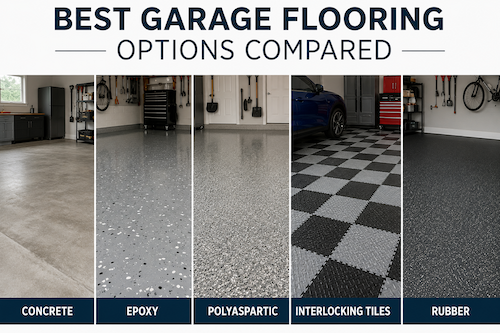
The challenge is deciding which flooring system makes the most sense. Epoxy coatings, polyaspartic coatings, interlocking tiles, rubber flooring, and polished concrete all have their supporters and critics.
In this guide, we’ll compare the best garage flooring options available today, examine real homeowner feedback, discuss practical considerations, and help you determine which solution fits your garage and budget.
If you like to knoe more about the interiors you can find posts HERE.
Why Garage Flooring Matters
Most garages begin with a plain concrete slab.
While concrete is strong, it has several weaknesses:
- Absorbs stains
- Develops cracks
- Creates dust
- Shows tire marks
- Can become slippery when wet
The right flooring system helps solve many of these problems while improving the overall appearance of the space.
Many homeowners report that upgrading the garage floor made the entire garage feel cleaner, brighter, and more usable.
Garage Flooring Options Compared
Epoxy Floor Coatings
Epoxy remains one of the most popular garage flooring solutions.
It consists of a resin and hardener that chemically react to form a durable surface coating.
Advantages
- Attractive glossy finish
- Excellent stain resistance
- Chemical resistance
- Wide color choices
- Decorative flake options
Drawbacks
- Extensive surface preparation required
- Sensitive installation conditions
- Can yellow under UV exposure
- Longer curing times
Best For
- Residential garages
- Workshops
- Hobby spaces
User Feedback Analysis
Many homeowners love the professional appearance and easy cleaning. However, most complaints stem from poor surface preparation rather than the epoxy itself. Peeling and delamination are often linked to moisture issues or improper installation.
Ground coating |
|---|
 |
Polyaspartic Floor Coatings
Polyaspartic systems have become increasingly popular over the last few years.
Many professional installers now recommend them over traditional epoxy.
Advantages
- Faster curing
- UV stability
- Excellent durability
- High chemical resistance
- Better temperature flexibility
Drawbacks
- Higher cost
- Less DIY-friendly
- Short working time during installation
Best For
- Premium garage projects
- High-traffic garages
- Areas with significant sun exposure
User Feedback Analysis
Homeowners frequently praise the durability and color stability. Many report that their floors continue looking new after years of use.
Ground coating |
|---|
 |
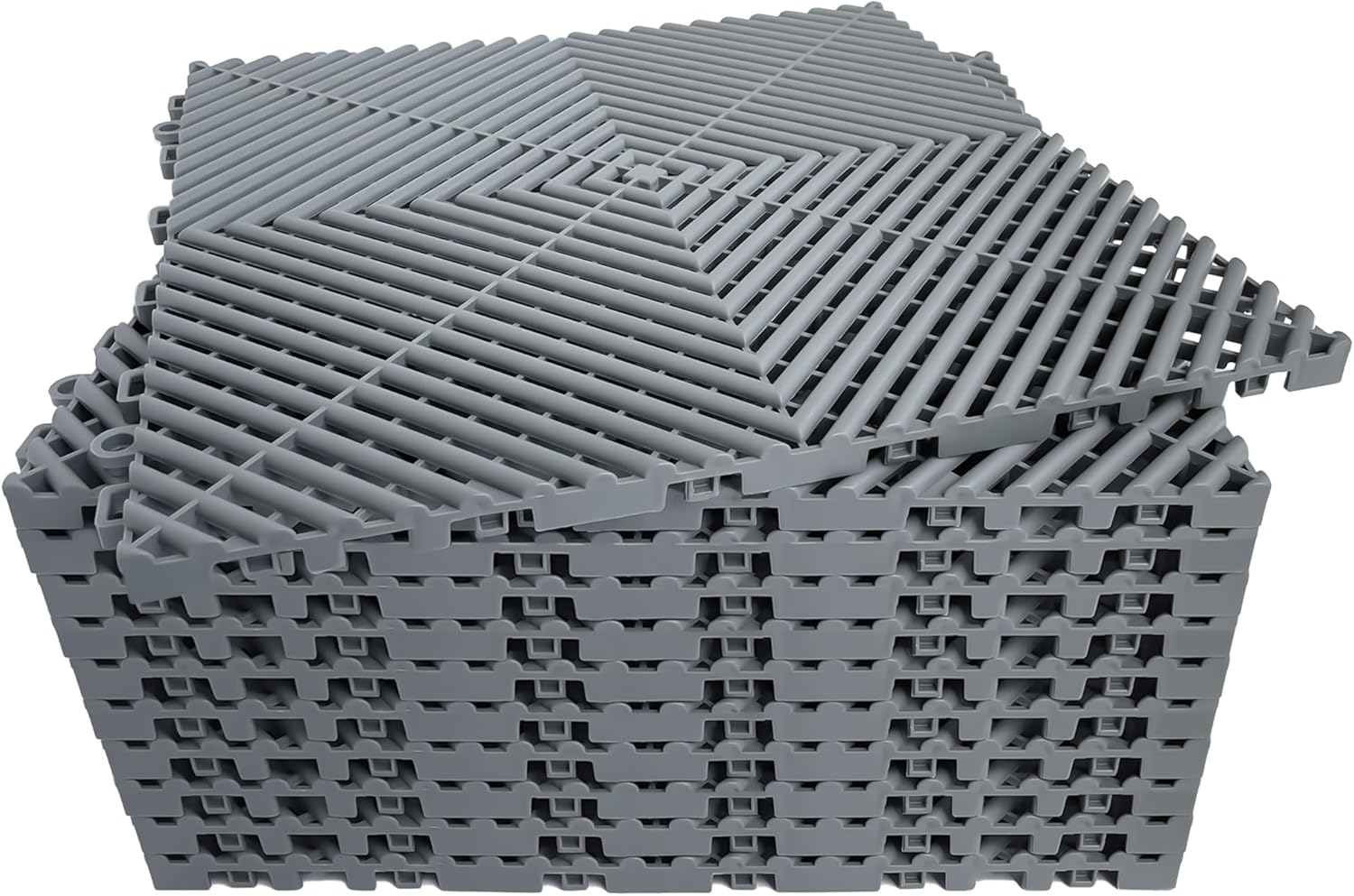
Interlocking Garage Tiles
Interlocking tiles create a floating floor installed directly over concrete.
They are commonly made from PVC or polypropylene.
Advantages
- Easy installation
- DIY friendly
- Replaceable sections
- Attractive appearance
- Minimal floor preparation
Drawbacks
- Higher material cost
- Moisture can become trapped underneath
- Heavy loads may affect some products
Best For
- Home gyms
- Show garages
- Multi-purpose spaces
User Feedback Analysis
Users consistently mention the simplicity of installation. Many appreciate being able to replace individual damaged tiles without affecting the rest of the floor.
Rubber Flooring
Rubber flooring is commonly found in garages used as gyms or workshops.
Advantages
- Comfortable underfoot
- Impact absorption
- Noise reduction
- Easy installation
Drawbacks
- Limited vehicle suitability
- Potential odor initially
- Less resistant to some chemicals
Best For
- Home gyms
- Workstations
- Storage areas
User Feedback Analysis
Users love the comfort factor. Many homeowners who spend extended periods standing in their garages find rubber flooring significantly more comfortable than bare concrete.
Ground coating |
|---|
 |
Polished Concrete
Polished concrete transforms the existing slab into a refined finished surface.
The process uses progressively finer grinding and polishing techniques.
Advantages
- Low maintenance
- Modern appearance
- Long lifespan
- No coating to peel
Drawbacks
- Professional installation usually required
- Existing cracks remain visible
- Limited cushioning
Best For
- Modern garages
- Luxury homes
- Minimalist designs
User Feedback Analysis
Homeowners often appreciate the clean, industrial appearance. However, some note that polished concrete can become slippery when wet.
Quick Comparison Table
| Flooring Type | Durability | Installation Difficulty | Maintenance | Cost |
|---|---|---|---|---|
| Epoxy | High | Moderate | Low | Moderate |
| Polyaspartic | Very High | High | Low | High |
| Interlocking Tiles | High | Easy | Low | Moderate to High |
| Rubber Flooring | Moderate | Easy | Low | Moderate |
| Polished Concrete | High | High | Very Low | Moderate to High |
What Homeowners Say About Garage Flooring
After reviewing renovation forums, homeowner groups, contractor discussions, and product reviews, several trends consistently appear.
Most Appreciated Features
Homeowners value:
- Easy cleaning
- Chemical resistance
- Attractive appearance
- Durability
- Improved lighting reflection
Many users mention that brighter garage floors make the entire space feel larger.
Most Common Complaints
Negative feedback typically involves:
- Poor preparation before coating
- Moisture problems
- Improper installation
- Cheap materials
- Unrealistic expectations
Interestingly, flooring failures often relate more to installation quality than product selection.
Pros and Cons Comparison
| Pros | Cons |
|---|---|
| Improves garage appearance | Initial investment required |
| Easier cleaning and maintenance | Some systems require professional installation |
| Better resistance to stains and chemicals | Preparation can be time-consuming |
| Increases garage usability | Premium systems can be expensive |
| May improve home value | Certain coatings require curing time |
| Protects concrete slab | Not every system suits every climate |
How to Choose the Right Garage Flooring
Consider How You Use the Garage
Different activities require different flooring characteristics.
For example:
Vehicle Storage
Priorities:
- Chemical resistance
- Tire resistance
- Easy cleaning
Best choices:
- Polyaspartic
- Epoxy
Home Gym
Priorities:
- Comfort
- Shock absorption
- Noise reduction
Best choices:
- Rubber flooring
- Interlocking tiles
Workshop
Priorities:
- Durability
- Easy cleanup
- Impact resistance
Best choices:
- Epoxy
- Polyaspartic
Show Garage
Priorities:
- Appearance
- Customization
- Visual impact
Best choices:
- Polyaspartic
- Decorative epoxy
- Interlocking tiles
Installation Tips
Regardless of flooring type, success often depends on preparation.
Clean Thoroughly
Remove:
- Oil
- Grease
- Dirt
- Previous coatings
Contaminants can cause coating failure.
Repair Existing Cracks
Before installation:
- Fill cracks
- Repair spalling
- Address moisture issues
A flooring system is only as good as the surface beneath it.
Follow Manufacturer Guidelines
Temperature, humidity, and curing times significantly affect performance.
Many DIY failures occur because instructions are rushed or ignored.
Buying Considerations
Before selecting a garage floor system, ask yourself several questions.
What Is Your Budget?
General cost ranking:
- Polished concrete
- Polyaspartic coatings
- Interlocking tiles
- Epoxy coatings
- Rubber flooring
Pricing varies by region and installation method.
How Much Maintenance Do You Want?
Lowest maintenance:
- Polished concrete
- Polyaspartic
Moderate maintenance:
- Epoxy
- Tiles
Do You Plan to Install It Yourself?
Most DIY-friendly:
- Interlocking tiles
- Rubber flooring
Most challenging:
- Polyaspartic coatings
- Professional polishing
How Long Do You Plan to Stay in the Home?
Long-term homeowners often benefit from investing in higher-end systems that provide greater durability and visual appeal.
Which Garage Flooring Option Is Best?
There is no single perfect answer.
For most homeowners:
- Epoxy offers excellent value.
- Polyaspartic provides premium performance.
- Interlocking tiles offer maximum DIY convenience.
- Rubber flooring excels in gym environments.
- Polished concrete delivers a clean, modern aesthetic.
The best choice depends on how you use the garage, your budget, and your willingness to handle installation and maintenance.
Final Thoughts
Garage flooring has evolved significantly in recent years. Homeowners now have more choices than ever, ranging from simple tile systems to premium professional coatings.
If durability and long-term performance are your top priorities, polyaspartic coatings often lead the field. If value matters most, epoxy remains one of the best investments available. For DIY enthusiasts seeking flexibility and easy installation, interlocking tiles continue to gain popularity.
The key is choosing a flooring system that matches your actual needs rather than simply following trends. A well-chosen garage floor can improve functionality, simplify maintenance, and make the entire space more enjoyable for years to come.
Disclaimer
This content is based on information from various sources and represents recommendations according to available data. Quality and correctness of products are the responsibility of manufacturers and sellers.
AD |
|---|
 |
Leave a Reply