
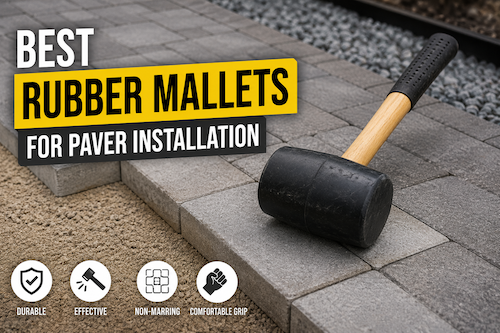
When people think about installing pavers, they usually focus on the big-ticket tools. Plate compactors, wet saws, levels, and screeds often get most of the attention.
Yet one of the most frequently used tools on a paver project is something much simpler: a rubber mallet.
A good rubber mallet helps seat pavers properly, adjust alignment, and prevent damage to the surface during installation. It might not look impressive sitting in a toolbox, but anyone who has installed a patio, walkway, or driveway knows how often it ends up in your hand.
The problem is that not all rubber mallets are built the same. Some are too light for paver work. Others wear out quickly or have uncomfortable handles that become frustrating during larger projects.
In this guide, we’ll look at some of the best rubber mallets for paver installation, what real users think about them, and how to choose the right one for your project.
if you like see more post regards the tools click HERE.
Why a Rubber Mallet Matters for Paver Installation
Unlike a steel hammer, a rubber mallet allows you to apply force without chipping, cracking, or scratching pavers.
During installation, it’s commonly used for:
- Adjusting paver height
- Aligning edges and joints
- Seating pavers into bedding sand
- Fine-tuning patterns
- Working with retaining wall blocks
- Installing edging systems
A quality rubber mallet delivers controlled impact while protecting the paver surface.
What to Look for in a Rubber Mallet
Before looking at specific models, it helps to understand the features that actually matter.
Head Weight
Most paver installers prefer:
- 16 oz for small jobs
- 24 oz to 32 oz for general paver work
- 40 oz and above for larger hardscape projects
Heavier heads require fewer strikes but can become tiring during long installations.
Handle Material
Common choices include:
- Fiberglass
- Steel-core
- Hickory wood
- Composite materials
Fiberglass tends to offer the best balance of durability and comfort.
Rubber Quality
The rubber should be firm enough to transfer force efficiently while remaining soft enough to protect the paver surface.
Cheap rubber often deteriorates faster or leaves marks.
Comfort
A paver project can involve hundreds or thousands of taps. Handle grip and vibration control become important quickly.
Best Rubber Mallets for Paver Installation
1. TEKTON 32 oz Rubber Mallet
The TEKTON rubber mallet has become one of the most popular choices among DIY homeowners and contractors.
Its 32-ounce head provides enough weight for paver installation without feeling excessive.
Pros and Cons
| Pros | Cons |
|---|---|
| Good balance between weight and control | Handle may feel short for some users |
| Non-marking rubber head | Not ideal for very large retaining wall blocks |
| Comfortable grip | |
| Affordable price point |
User Feedback Analysis
Many users mention that this mallet feels heavier than expected in a good way. Reviews frequently praise its durability and the fact that it doesn’t leave noticeable marks on concrete or stone surfaces.
Several DIY installers report using it through entire patio projects without noticeable wear.
Rubber Mallet |
|---|
 |
2. Edward Tools Rubber Mallet
This model is popular among homeowners looking for a reliable budget-friendly option.
Pros and Cons
| Pros | Cons |
|---|---|
| Affordable | Less shock absorption than premium models |
| Solid rubber construction | Grip could be improved |
| Good for occasional projects | |
| Non-marring head |
User Feedback Analysis
Users generally describe it as dependable for occasional hardscape projects. The most common praise involves its value for money.
Some users note that the handle transmits more vibration compared to higher-end mallets.
Rubber Mallet |
|---|
 |
3. Estwing Sure Strike Rubber Mallet
Estwing has a strong reputation in construction tools, and this mallet reflects that.
Pros and Cons
| Pros | Cons |
|---|---|
| Excellent build quality | Slightly higher price |
| Durable fiberglass handle | Limited size options |
| Comfortable grip | |
| Good vibration reduction |
User Feedback Analysis
Contractors often praise Estwing products for longevity. Reviews frequently mention years of use without loosening heads or handle issues.
Many hardscape professionals consider it a dependable long-term investment.
Rubber Mallet |
|---|
 |
4. Bon Tool Rubber Mallet
Bon Tool products are commonly found on professional hardscape job sites.
Pros and Cons
| Pros | Cons |
|---|---|
| Contractor-grade construction | More expensive |
| Available in multiple sizes | Heavier than some users prefer |
| Excellent impact performance | |
| Durable rubber head |
User Feedback Analysis
Professional users often report excellent performance during retaining wall and paver installations.
The heavier head receives positive feedback from installers working on larger projects where efficiency matters.
Rubber Mallet |
|---|
 |
5. Thor Hammer Soft Face Mallet
This is a premium option often used by professionals who demand precision.
Pros and Cons
| Pros | Cons |
|---|---|
| Replaceable faces | Higher cost |
| Exceptional durability | More than most homeowners need |
| Excellent control | |
| Professional-grade quality |
User Feedback Analysis
Users frequently mention how long these mallets last. Contractors appreciate the replaceable striking faces, which can significantly extend tool life.
For occasional DIY projects, however, many feel it’s more tool than necessary.
Rubber Mallet |
|---|
 |
How to Use a Rubber Mallet for Paver Installation
Many installation issues occur because pavers are struck incorrectly.
Step 1: Place the Paver
Set the paver gently onto the screeded bedding layer.
Step 2: Check Alignment
Confirm that spacing and pattern alignment are correct before striking.
Step 3: Tap Gradually
Use several moderate strikes rather than one heavy hit.
This helps seat the paver evenly.
Step 4: Verify Height
Use a straightedge or level to ensure adjacent pavers remain consistent.
Step 5: Make Fine Adjustments
Continue adjusting until the surface sits flush with surrounding units.
Common Mistakes to Avoid
Using a Steel Hammer
This can chip pavers and damage decorative surfaces.
Striking Too Hard
Excessive force can crack pavers or create uneven settling.
Ignoring Bedding Preparation
A mallet cannot compensate for poor screeding or base preparation.
Choosing a Mallet That’s Too Light
Very lightweight mallets often require excessive effort and slow down installation.
Buying Guide
1. Consider Project Size
For small patios:
- 16 oz to 24 oz mallets are usually sufficient.
For driveways and large hardscape installations:
- 32 oz to 40 oz models often work better.
2. Think About Frequency of Use
Occasional DIY projects:
- Budget-friendly models are often enough.
Frequent installations:
- Contractor-grade tools provide better long-term value.
3. Evaluate Handle Comfort
Extended use can cause hand fatigue.
Look for:
- Cushioned grips
- Fiberglass handles
- Shock-reducing designs
4. Head Material Quality
Better rubber compounds tend to:
- Last longer
- Resist cracking
- Leave fewer marks
What Real Users Often Overlook
After reviewing discussions among homeowners and contractors, a few themes appear repeatedly.
Many buyers focus entirely on head weight while ignoring comfort.
After several hours of paver installation, grip quality often becomes more important than an extra few ounces of striking force.
Another common mistake is purchasing the cheapest available mallet. While inexpensive models can work well for small projects, lower-quality rubber tends to deteriorate faster under jobsite conditions.
Many experienced installers also recommend keeping two mallets available:
- A lighter model for detail work
- A heavier model for seating larger pavers
This approach improves efficiency and reduces fatigue.
Are Expensive Rubber Mallets Worth It?
For occasional backyard projects, probably not.
Most homeowners installing a patio once every few years will be perfectly happy with a quality mid-range model like the TEKTON or Edward Tools mallet.
However, contractors and frequent DIY users often find premium options worthwhile due to:
- Better durability
- Improved comfort
- Less vibration
- Longer service life
Over multiple projects, those advantages can add up.
Final Thoughts
A rubber mallet may not be the most expensive tool in a paver installation toolkit, but it’s one of the most important.
The right mallet helps you seat pavers accurately, avoid surface damage, and work more efficiently throughout the project.
For most homeowners, the TEKTON 32 oz Rubber Mallet offers one of the best balances of performance, comfort, and value. Professional installers may appreciate the added durability of options from Estwing, Bon Tool, or Thor.
Ultimately, the best rubber mallet is the one that feels comfortable in your hand, delivers consistent impact, and helps you achieve a smooth, professional-looking paver installation.
Disclaimer
This content is based on information from various sources and represents recommendations according to available data. Quality and correctness of products are the responsibility of manufacturers and sellers.
Leave a Reply