
A beautiful paver patio or driveway is only as strong as the material holding everything together. Many homeowners spend thousands of dollars selecting premium pavers but overlook what goes between them. Unfortunately, that’s often where problems begin.
Loose joints can lead to shifting pavers, weed growth, ant infestations, erosion, and costly repairs. That’s why choosing the right paver jointing compound is just as important as selecting the pavers themselves.
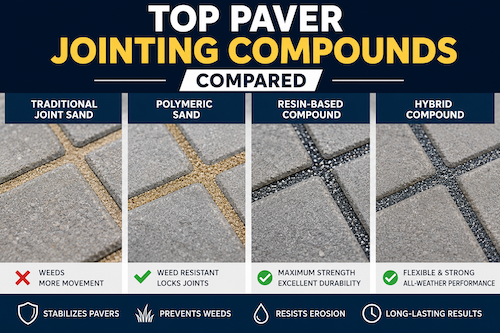
Years ago, traditional joint sand was the standard solution. While it still has its place, modern jointing compounds have evolved significantly. Today, homeowners can choose from polymeric sand, resin-based compounds, hybrid technologies, and specialty products designed for different climates and applications.
The challenge is knowing which option actually performs best in the real world.
In this guide, we’ll compare the most popular paver jointing compounds, discuss what homeowners and contractors are saying, explain installation best practices, and help you choose the right product for your project.
Check more post related to this Topic HERE.
Why Paver Jointing Material Matters
The joints between pavers do much more than fill empty spaces.
A quality jointing compound helps:
- Lock pavers together
- Reduce movement
- Prevent weed growth
- Discourage ants and insects
- Improve drainage
- Reduce erosion
- Extend hardscape lifespan
When joints fail, even a perfectly installed patio or driveway can begin showing problems.
Many homeowners discover that most paver maintenance issues originate in the joints rather than the pavers themselves.
Types of Paver Jointing Compounds
Before comparing products, it helps to understand the major categories.
Traditional Joint Sand
This is the simplest and most affordable option.
It consists of fine sand swept into paver joints.
Advantages
- Low cost
- Easy installation
- Readily available
Disadvantages
- Washes away easily
- Encourages weed growth
- Requires regular replenishment
Best for:
- Temporary installations
- Budget projects
- Low-traffic areas
Polymeric Sand
Polymeric sand remains the most popular paver jointing solution today.
It combines fine sand with polymer additives that activate when exposed to water.
Once cured, the material hardens and helps stabilize pavers.
Advantages
- Weed resistance
- Insect resistance
- Improved durability
- Easy application
Disadvantages
- Requires careful installation
- Can haze pavers if improperly cleaned
- Sensitive to weather during curing
Best for:
- Patios
- Walkways
- Residential driveways
Joint filler |
|---|
 |
Resin-Based Jointing Compounds
Resin compounds use binding agents to create stronger and more flexible joints.
Advantages
- Excellent durability
- Strong erosion resistance
- High flexibility
- Long lifespan
Disadvantages
- Higher cost
- More complex installation
Best for:
- Premium hardscapes
- Commercial projects
- Heavy-use areas
Hybrid Jointing Compounds
Hybrid products combine features from polymeric and resin technologies.
Advantages
- Improved flexibility
- Enhanced drainage
- Better weather resistance
Disadvantages
- Limited availability
- Higher pricing
Best for:
- Challenging climates
- Freeze-thaw environments
Comparison Table
| Jointing Material | Weed Resistance | Durability | Ease of Installation | Cost |
|---|---|---|---|---|
| Traditional Sand | Low | Low | Very Easy | Low |
| Polymeric Sand | High | High | Moderate | Moderate |
| Resin-Based Compound | Very High | Very High | Moderate to Difficult | High |
| Hybrid Compound | Very High | Very High | Moderate | High |
Polymeric Sand vs Resin Jointing Compound
This is one of the most common questions among homeowners.
Polymeric Sand
Strengths:
- More affordable
- Widely available
- DIY friendly
- Effective weed control
Weaknesses:
- Can become brittle over time
- Sensitive to installation errors
Resin Jointing Compound
Strengths:
- Greater flexibility
- Superior erosion resistance
- Longer service life
Weaknesses:
- Higher cost
- Installation requires greater attention
For most residential patios and walkways, polymeric sand offers an excellent balance of performance and value. Resin products often become attractive for premium projects and challenging conditions.
What Homeowners Are Saying
After reviewing landscaping forums, contractor discussions, hardscape communities, and homeowner reviews, several trends consistently emerge.
Most Common Positive Feedback
Users frequently praise:
- Reduced weed growth
- Cleaner patio appearance
- Less joint washout
- Improved paver stability
Many homeowners report that switching from traditional sand to polymeric sand dramatically reduced maintenance.
Common Complaints
The majority of negative reviews involve installation mistakes rather than product defects.
Common issues include:
- Surface hazing
- Improper watering
- Incomplete curing
- Overfilled joints
Interestingly, experienced installers often note that nearly every major complaint can be traced back to application errors.
Best Applications for Each Jointing Compound
Patios
Recommended:
- Polymeric sand
- Hybrid compounds
Patios generally experience moderate traffic and benefit from easy maintenance.
Walkways
Recommended:
- Polymeric sand
Walkways usually require a balance of stability and affordability.
Driveways
Recommended:
- High-performance polymeric sand
- Resin compounds
Vehicle traffic creates greater stress on paver joints.
Pool Decks
Recommended:
- Resin-based compounds
- Hybrid compounds
These products tend to handle moisture and movement more effectively.
Pros and Cons Table
| Pros | Cons |
|---|---|
| Reduces weed growth | Some products require careful installation |
| Improves paver stability | Premium options can be expensive |
| Helps prevent erosion | Improper application may cause hazing |
| Reduces insect activity | Weather can affect curing |
| Extends hardscape lifespan | Not all products suit every climate |
| Improves appearance | Repairs may require reapplication |
How to Apply Paver Jointing Compound Properly
Installation quality directly affects performance.
Step 1: Clean the Surface
Remove:
- Dust
- Debris
- Existing weeds
- Loose material
Clean joints allow proper bonding.
Step 2: Ensure Dry Conditions
Most polymeric products require completely dry pavers before installation.
Moisture present during application can activate the product prematurely.
Step 3: Sweep Material into Joints
Use a push broom to work the compound deeply into the joints.
Multiple passes may be necessary.
Step 4: Compact if Necessary
For larger pavers, contractors often use a plate compactor to settle material fully into the joints.
Step 5: Remove Excess Material
This step is critical.
Residue left on paver surfaces can create haze after activation.
Step 6: Activate with Water
Apply water according to manufacturer recommendations.
Too much or too little water can negatively affect performance.
Buying Considerations
Before purchasing a paver jointing compound, consider the following factors.
Joint Width
Some products are designed for narrow joints while others handle wider gaps.
Always verify compatibility.
Climate
Freeze-thaw environments place additional stress on joint materials.
Flexible products often perform better in these regions.
Traffic Level
Patios and walkways have different requirements than driveways.
Choose a product rated for expected loads.
Drainage Requirements
Some modern compounds offer enhanced permeability for improved water management.
Maintenance Expectations
Homeowners seeking minimal maintenance often prefer premium polymeric or resin-based solutions.
Are Premium Jointing Compounds Worth It?
In many situations, yes.
A high-quality paver installation represents a significant investment. Spending slightly more on a durable jointing compound often prevents future maintenance headaches.
Many contractors estimate that failed joints account for a large percentage of paver maintenance calls.
When viewed over the lifespan of a patio or driveway, premium jointing compounds often provide excellent value.
Common Mistakes to Avoid
Avoid these frequent installation errors:
- Applying product to wet pavers
- Skipping joint cleaning
- Using too much water
- Leaving residue on surfaces
- Ignoring weather forecasts
- Choosing the wrong product for the application
Most performance issues can be avoided through proper installation and product selection.
Final Thoughts
When comparing the top paver jointing compounds, polymeric sand remains the most practical solution for many homeowners. It provides excellent weed resistance, improved paver stability, and a relatively straightforward installation process.
For high-end projects, driveways, and challenging climates, resin-based and hybrid compounds often deliver superior long-term performance. While they cost more upfront, they can reduce maintenance and improve durability over time.
Ultimately, the best paver jointing compound depends on your project type, climate, traffic level, and maintenance expectations. Choosing a quality product and installing it correctly will help protect your hardscape investment for years to come.
Joint filler |
|---|
 |
Disclaimer
This content is based on information from various sources and represents recommendations according to available data. Quality and correctness of products are the responsibility of manufacturers and sellers.
Leave a Reply