
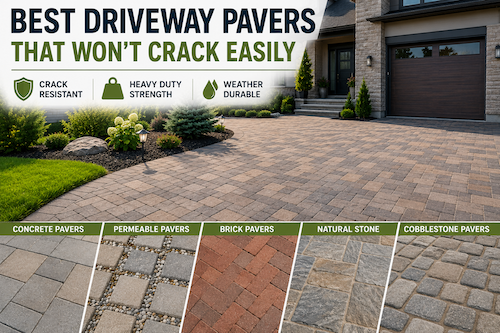
A driveway is one of the hardest-working surfaces around a home. Unlike a patio or walkway, it must support the weight of vehicles every day while dealing with rain, sun, temperature changes, and ground movement. That’s why many homeowners start researching driveway materials after seeing cracks appear in concrete slabs or asphalt surfaces.
One of the biggest reasons pavers have become increasingly popular is their ability to resist cracking. While no paving material is completely indestructible, certain types of driveway pavers handle stress, weight, and environmental conditions much better than others.
The key is understanding which pavers are designed for driveway applications and which are better suited for patios or garden paths. Choosing the wrong product can lead to shifting, cracking, and costly repairs. Choosing the right one can provide decades of performance with relatively simple maintenance.
In this guide, we’ll compare the best driveway pavers that won’t crack easily, discuss real homeowner experiences, explain what affects durability, and help you select the right option for your property.
To see more post regards the hardscape visit this page HERE.
Why Driveway Pavers Resist Cracking Better Than Concrete
Many homeowners switch to pavers after experiencing problems with traditional concrete driveways.
The reason is simple.
A concrete slab is one large surface. When soil shifts or temperatures fluctuate, stress builds within the slab. Eventually, cracks form.
Pavers work differently.
Each unit acts independently while remaining connected to surrounding pavers through joint sand and edge restraints. This allows slight movement without creating large visible cracks.
Instead of one massive surface absorbing all the stress, hundreds of individual pieces share the load.
This flexibility is one of the biggest reasons properly installed paver driveways often outlast traditional concrete.
What Makes a Driveway Paver Crack Resistant?
Several factors influence durability.
High Compressive Strength
Driveway pavers should have a high compressive strength rating.
Quality concrete pavers often exceed 8,000 PSI, significantly stronger than many residential concrete slabs.
Higher strength helps resist:
- Vehicle loads
- Impact damage
- Surface wear
Proper Thickness
Driveway pavers are typically thicker than patio pavers.
Most residential driveways use pavers around 2⅜ inches (60 mm) thick.
Heavier-duty applications may require:
- 80 mm pavers
- Commercial-grade pavers
Thickness plays a major role in long-term durability.
Interlocking Design
Interlocking systems distribute weight across multiple pavers rather than concentrating stress on a single unit.
This design helps prevent:
- Settlement
- Cracking
- Surface deformation
Quality Base Preparation
Even the strongest paver can fail if installed over a poor foundation.
Most professionals agree that the base beneath the pavers is often more important than the pavers themselves.
Best Driveway Pavers That Won’t Crack Easily
Interlocking Concrete Pavers
Interlocking concrete pavers remain the most popular driveway option in North America.
Why They Perform Well
- High strength ratings
- Excellent load distribution
- Wide style selection
- Easy repairability
Best Applications
- Residential driveways
- Long driveways
- Multi-car households
User Feedback
Homeowners frequently report that interlocking concrete pavers remain stable for years when installed on a properly compacted base.
Many appreciate that individual units can be replaced if damaged.
Permeable Concrete Pavers
Permeable pavers continue growing in popularity.
Unlike traditional pavers, they allow water to pass through joints and into the ground below.
Advantages
- Reduced runoff
- Better drainage
- Less standing water
- Improved environmental performance
Durability
Because permeable systems reduce water accumulation beneath the surface, they can help minimize freeze-thaw damage in colder climates.
User Feedback
Owners often mention fewer drainage issues compared to traditional driveways.
Brick Pavers
Clay brick pavers have been used for generations.
Advantages
- Timeless appearance
- Natural color retention
- Strong durability
Potential Drawbacks
- Higher material costs
- Limited style options compared to concrete
User Feedback
Many homeowners appreciate the classic look and report excellent longevity even after decades of use.
Natural Stone Pavers
Natural stone creates some of the most attractive driveways available.
Popular options include:
- Granite
- Basalt
- Bluestone
- Quartzite
Advantages
- Exceptional durability
- Premium appearance
- Natural texture
Drawbacks
- Higher cost
- More complex installation
User Feedback
Homeowners frequently describe stone driveways as long-term investments that enhance property value.
Cobblestone Pavers
Cobblestone has been used on roads for centuries.
That history alone demonstrates its durability.
Advantages
- Extreme strength
- Historic character
- Excellent lifespan
Drawbacks
- Higher installation cost
- Rougher surface texture
User Feedback
Many users appreciate the old-world appearance and remarkable durability.
Cobble |
|---|
 |
Quick Comparison Table
| Paver Type | Crack Resistance | Cost | Maintenance | Lifespan |
|---|---|---|---|---|
| Interlocking Concrete | Excellent | Moderate | Low | 30-50 Years |
| Permeable Concrete | Excellent | Moderate to High | Moderate | 30-50 Years |
| Brick | Very Good | Moderate to High | Low | 40-75 Years |
| Natural Stone | Excellent | High | Low | 50+ Years |
| Cobblestone | Outstanding | High | Low | 75+ Years |
What Homeowners Say About Driveway Pavers
After reviewing homeowner forums, contractor discussions, landscaping communities, and product reviews, several patterns consistently emerge.
Most Common Praise
Homeowners often highlight:
- Minimal cracking concerns
- Attractive appearance
- Easy repairs
- Increased curb appeal
- Long service life
Many users specifically mention relief after replacing cracked concrete driveways.
Most Common Complaints
Negative comments usually involve:
- Higher upfront cost
- Weed growth in joints
- Poor installation practices
- Joint sand maintenance
Interestingly, complaints about actual paver cracking are relatively rare compared to complaints about concrete cracking.
Pros and Cons of Driveway Pavers
| Pros | Cons |
|---|---|
| Superior crack resistance | Higher initial investment |
| Easy repairs | Professional installation recommended |
| Attractive appearance | Joint maintenance required |
| Long lifespan | Installation takes longer |
| Excellent load distribution | Weeds may appear if neglected |
| Can increase property value | Premium materials cost more |
How to Install Driveway Pavers Correctly
The durability of a paver driveway depends heavily on installation quality.
Step 1: Excavation
Remove existing soil to the required depth.
The depth depends on:
- Climate
- Soil conditions
- Vehicle loads
Step 2: Install Aggregate Base
A compacted crushed stone base provides structural support.
This layer helps prevent:
- Settlement
- Shifting
- Uneven surfaces
Step 3: Compact Thoroughly
Proper compaction is critical.
Many driveway failures can be traced to inadequate compaction during installation.
Step 4: Bedding Sand
A thin layer of bedding sand creates a level setting surface.
Step 5: Install Pavers
Lay pavers according to the selected pattern.
Popular choices include:
- Herringbone
- Running bond
- Basket weave
Herringbone patterns are often preferred for driveways because they distribute loads effectively.
Step 6: Joint Sand Installation
Polymeric sand helps lock pavers together and reduce weed growth.
Buying Considerations
Before purchasing driveway pavers, consider several important factors.
Vehicle Weight
Heavier vehicles require stronger paver systems.
Consider:
- Pickup trucks
- RVs
- Commercial vehicles
These applications may require thicker pavers.
Climate
Freeze-thaw conditions demand durable materials and proper drainage.
Permeable systems often perform exceptionally well in these regions.
Budget
Concrete pavers generally offer the best balance between cost and performance.
Natural stone and cobblestone provide premium results at higher prices.
Maintenance Expectations
Some homeowners prefer low-maintenance options.
Others prioritize aesthetics and are willing to perform occasional upkeep.
Property Style
The driveway should complement the home’s architecture.
For example:
- Modern homes often pair well with large-format concrete pavers.
- Traditional homes frequently benefit from brick or cobblestone.
Are Premium Pavers Worth the Cost?
Many homeowners hesitate when comparing paver prices to concrete.
However, long-term value often changes the equation.
A concrete driveway may require:
- Crack repairs
- Resurfacing
- Replacement
over its lifetime.
Properly installed paver driveways often provide decades of service while allowing individual repairs rather than complete replacement.
Many homeowners ultimately find that the higher initial investment pays off through durability and appearance.
Final Thoughts
The best driveway pavers that won’t crack easily combine strength, flexibility, and proper installation. Interlocking concrete pavers remain the most practical choice for many homeowners, offering an excellent balance of durability, appearance, and cost.
For those seeking premium performance, natural stone and cobblestone provide exceptional longevity and timeless curb appeal. Permeable pavers continue gaining popularity because of their drainage benefits and resistance to freeze-thaw issues.
Regardless of material choice, remember that even the strongest paver system depends on proper base preparation and installation. When installed correctly, a quality paver driveway can remain attractive and functional for decades while avoiding many of the cracking issues commonly associated with concrete slabs.
Disclaimer
This content is based on information from various sources and represents recommendations according to available data. Quality and correctness of products are the responsibility of manufacturers and sellers.
Leave a Reply