
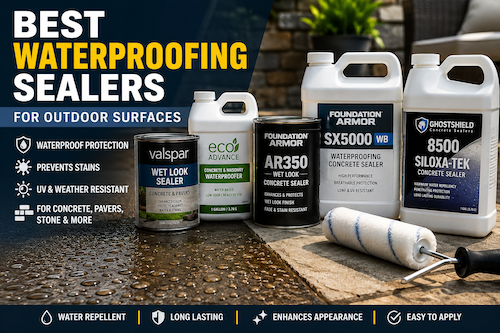
Outdoor surfaces are exposed to just about everything nature can throw at them. Rain, UV rays, snow, dirt, oil stains, mold, algae, and freeze-thaw cycles slowly wear away concrete, pavers, brick, and natural stone. Even premium materials can lose their appearance and durability without proper protection.
A quality waterproofing sealer acts as the first line of defense. It helps prevent water from soaking into porous materials, reduces staining, minimizes cracking caused by moisture, and often makes cleaning much easier. The challenge is that there are hundreds of products available, and not every sealer works the same way.
Some leave a glossy finish, while others are completely invisible. Some are designed for decorative patios, while others are built for heavy-duty driveways or pool decks.
This guide explains what to look for, compares some of the best waterproofing sealers currently available on Amazon, discusses real user experiences, and helps you choose the right product for your outdoor project.
if you like to see more subject on chemicals related to the flooring, visit HERE.
Why Waterproof Outdoor Surfaces?
Concrete, brick, pavers, and natural stone all contain tiny pores. Water slowly enters these pores and can create several problems:
- Surface cracks
- Efflorescence (white powder deposits)
- Mold and mildew growth
- Color fading
- Freeze-thaw damage
- Oil and grease stains
- Weed growth between pavers
A waterproof sealer reduces water absorption while allowing many materials to breathe, especially penetrating sealers.
According to industry testing and maintenance experts, penetrating sealers generally provide the best long-term protection against water intrusion because they soak into the surface instead of forming a coating on top. (Nanoprotect)
Types of Waterproofing Sealers
Penetrating Sealers
These absorb deep into the surface and chemically repel water.
Best for:
- Concrete
- Brick
- Natural stone
- Driveways
- Pool decks
Advantages
- Natural appearance
- Long lifespan
- Breathable
- Excellent water protection
Disadvantages
- Little color enhancement
- Limited stain resistance
Sealer |
|---|
 |
Acrylic Sealers
These create a protective film over the surface.
Best for
- Decorative patios
- Walkways
- Concrete pavers
Advantages
- Enhances color
- Available in matte or wet-look finish
- Affordable
Disadvantages
- Wears faster
- Requires more frequent reapplication
Sealer |
|---|
 |
Epoxy and Polyurethane Sealers
These provide maximum durability but are generally better suited for garages and commercial areas than exposed outdoor patios.
Advantages
- Excellent chemical resistance
- Extremely durable
Disadvantages
- More expensive
- Can become slippery outdoors
Sealer |
|---|
 |
Best Waterproofing Sealers for Outdoor Surfaces
1. Ghostshield Siloxa-Tek 8500
Best Overall Penetrating Sealer
Ideal for:
- Concrete
- Brick
- Pavers
- Driveways
- Pool decks
Why it stands out
Siloxa-Tek 8500 is a silane-siloxane penetrating sealer designed to stop water absorption while remaining nearly invisible after application.
Users consistently mention that rainwater beads nicely after curing and that application with a pump sprayer is straightforward. Many also noticed improved resistance around patios and pool areas. (Lowe’s)
Pros
- Excellent waterproofing
- Natural finish
- Long-lasting protection
- UV resistant
- Easy spray application
Cons
- Premium price
- Surface preparation is critical
Sealer |
|---|
 |
2. Foundation Armor SX5000WB
Best Long-Term Protection
This water-based penetrating sealer is popular among homeowners looking for protection without changing the appearance of their concrete or stone.
It performs particularly well in climates exposed to heavy rain, snow, and road salts.
Pros
- Invisible finish
- Deep penetration
- Excellent freeze-thaw protection
- Low VOC
Cons
- Doesn’t enhance color
- Higher initial cost
Sealer |
|---|
 |
3. Foundation Armor AR350
Best Wet Look Sealer
If your patio or driveway looks faded, AR350 combines waterproofing with color enhancement.
Independent testing found that it produced attractive color enhancement while maintaining strong water repellency and stain resistance on concrete. (Bob Vila)
Pros
- Beautiful wet appearance
- Good stain resistance
- Easy application
Cons
- Designed mainly for concrete
- Requires maintenance every few years
Sealer |
|---|
 |
4. Eco Advance Concrete & Masonry Waterproofer
Best Budget Choice
For homeowners wanting solid protection without spending a fortune, Eco Advance is one of the better values.
It protects against:
- Water
- Mold
- Mildew
- Deicing salts
while keeping the original appearance intact. (Bob Vila)
Pros
- Affordable
- Safe around plants and pets after curing
- Easy cleanup
Cons
- Less abrasion resistance
- Multiple coats recommended
Sealer |
|---|
 |
5. Valspar Wet Look Sealer
Best for Decorative Patios
If appearance matters as much as protection, this sealer gives concrete and pavers a richer color.
Many reviewers mention that it rolls on easily and noticeably improves dull-looking pavers, though some expected a glossier finish than they received. (Lowe’s)
Pros
- Attractive finish
- Easy roller application
- Good water resistance
Cons
- Requires periodic reapplication
- Can become slightly slippery when wet
Sealer |
|---|
 |
Pros and Cons
| Pros | Cons |
|---|---|
| Protects against water penetration | Needs periodic reapplication |
| Helps prevent cracking | Some products have strong odor |
| Makes cleaning easier | Surface preparation takes time |
| Reduces mold and mildew growth | Wrong product can change appearance |
| Helps reduce staining | Premium sealers are expensive |
| Extends life of patios and driveways | Some topical coatings become slippery |
What Real Users Are Saying
One of the best ways to judge a sealer is by looking at long-term customer experiences rather than marketing claims.
After reviewing homeowner feedback from major retailers and landscaping discussions, several patterns appeared consistently.
Positive Comments
Many homeowners appreciated:
- Easy spray or roller application
- Water beading after rain
- Better resistance to dirt
- Richer appearance with wet-look products
- Less moss and algae growth
- Easier pressure washing months later
Products like Ghostshield and Foundation Armor received particularly positive comments for maintaining water repellency over time. (Lowe’s)
Common Complaints
The most common issues were actually related to installation mistakes rather than poor products.
Users reported problems such as:
- Applying sealer to damp surfaces
- Applying too much product
- White hazy appearance
- Uneven glossy patches
- Dark spots trapped beneath the coating
Several discussions among homeowners concluded that moisture trapped during application caused many of these problems. (Reddit)
Overall, the consensus is clear: quality sealers perform very well when surface preparation and weather conditions are correct.
Buying Guide
1. Surface Material
Always match the sealer to your surface.
Different products are formulated for:
- Concrete
- Brick
- Limestone
- Granite
- Travertine
- Sandstone
- Slate
- Clay pavers
2. Finish
Choose between:
Natural Finish
- Invisible
- Keeps original appearance
Wet Look
- Darker color
- Richer appearance
Gloss Finish
- Decorative
- More noticeable shine
3. Climate
Areas with:
- Heavy rainfall
- Snow
- Freeze-thaw cycles
- Coastal salt exposure
benefit from penetrating silane or siloxane sealers because they offer deeper water protection. (Nanoprotect)
4. Expected Lifespan
Typical durability:
- Acrylic: 2–4 years
- Penetrating: 5–10 years
- Premium silane/siloxane: often longer depending on exposure and maintenance. (The Washington Post)
5. Coverage
Always calculate:
Surface area ÷ Manufacturer coverage rate
Porous concrete usually requires more product than dense stone.
How to Apply Waterproofing Sealer
Proper application is just as important as buying a quality product.
Step 1
Pressure wash the surface.
Remove:
- Dirt
- Algae
- Moss
- Oil stains
- Existing debris
Step 2
Allow the surface to dry completely.
Many manufacturers recommend waiting at least 24 to 48 hours after cleaning, depending on weather conditions.
Step 3
Repair cracks if necessary.
Step 4
Apply using:
- Pump sprayer
- Roller
- Brush
depending on product instructions.
Step 5
Avoid puddles or overapplication.
Thin, even coats generally produce better results.
Step 6
Allow proper curing.
Most sealers need at least 24 hours before rain and longer before heavy traffic.
Common Mistakes to Avoid
- Sealing dirty concrete
- Applying before rain
- Applying under direct hot sunlight
- Using the wrong sealer for natural stone
- Ignoring manufacturer coverage rates
- Applying multiple heavy coats instead of thin coats
Frequently Asked Questions
How often should outdoor surfaces be resealed?
Most penetrating sealers last between five and ten years, while acrylic sealers typically require reapplication every two to four years depending on traffic and weather exposure. (The Washington Post)
Is waterproofing the same as sealing?
Not exactly. Waterproofing sealers primarily reduce water absorption, while some decorative sealers focus more on appearance and stain protection.
Can I seal wet concrete?
No.
Most manufacturers recommend completely dry surfaces for proper penetration and curing.
Do waterproof sealers stop weeds?
Not entirely.
They can help preserve polymeric sand and reduce moisture that encourages weed growth, but they won’t eliminate weeds completely. (Reddit)
Final Thoughts
A good waterproofing sealer is one of the smartest investments you can make for an outdoor patio, driveway, walkway, or pool deck. While no product makes a surface maintenance-free, the right sealer can significantly reduce water damage, staining, and long-term wear.
For homeowners who want maximum durability with little change to the appearance, a penetrating silane or siloxane sealer is usually the best choice. If improving color is also a priority, an acrylic wet-look sealer may be the better option, provided you’re comfortable with more frequent maintenance.
Whichever product you choose, remember that preparation is just as important as the sealer itself. Clean, dry surfaces and careful application consistently produce the best long-term results.
Disclaimer
This content is based on information from various sources and represents recommendations according to available data. Quality and correctness of products are the responsibility of manufacturers and sellers.
Leave a Reply