
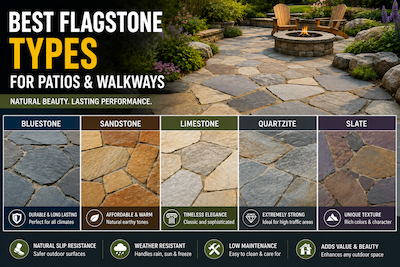
Few landscaping materials create a timeless outdoor space quite like flagstone. Whether you’re building a backyard patio for entertaining or a winding garden walkway, flagstone brings a natural look that’s difficult to match with concrete or manufactured pavers. Every piece has its own color, texture, and shape, giving your outdoor space character that looks like it belongs in the landscape rather than sitting on top of it.
The challenge is that “flagstone” isn’t actually one specific stone. It’s a general term used for flat natural stones that can be cut or split into slabs suitable for paving. Bluestone, sandstone, limestone, quartzite, and slate are all considered flagstone, but each performs differently depending on your climate, budget, and design goals.
Some stones handle freezing winters exceptionally well, while others are better suited to warm, dry climates. Some require regular sealing, while others naturally resist weathering.
In this guide, we’ll compare the most popular flagstone types, explain their pros and cons, summarize real homeowner experiences, and help you choose the right stone for your patio or walkway.
To see more post related to hardscape check HERE.
Primary Keyword
Best Flagstone Types for Patios and Walkways
Secondary Keywords
- Best flagstone for patio
- Flagstone walkway ideas
- Bluestone vs sandstone
- Quartzite flagstone
- Limestone patio stone
- Natural stone patio
- Flagstone paving
- Patio flagstone types
- Outdoor flagstone
- Flagstone landscaping
What Is Flagstone?
Many homeowners think flagstone refers to one specific type of rock, but that’s not actually the case.
Flagstone is a general term for flat natural stones that split into slabs suitable for paving. Common flagstone materials include:
- Bluestone
- Sandstone
- Limestone
- Quartzite
- Slate
Each offers a different appearance, durability level, and maintenance requirement, making the best choice dependent on where you live and how you plan to use your outdoor space. (Angi)
Why Flagstone Remains So Popular
Natural flagstone has several advantages over poured concrete or manufactured pavers.
It offers:
- Unique natural beauty
- Excellent durability
- Better traction than many smooth pavers
- A timeless appearance
- Flexible installation patterns
- Easy integration with landscaping
Because no two pieces are exactly alike, every patio or walkway has its own distinctive look.
Best Flagstone Types for Patios and Walkways
1. Bluestone
Best Overall
Bluestone is one of the most popular choices for patios and walkways throughout North America.
Its dense structure makes it highly resistant to moisture and freeze-thaw cycles, making it an excellent option in colder climates.
Typical colors include:
- Blue-gray
- Charcoal
- Brown
- Rust
- Full-color blends
Landscape designers frequently recommend bluestone because it complements both traditional and modern homes while providing outstanding durability. (MasonryCalcs)
Pros
- Excellent durability
- Handles freezing weather well
- Premium appearance
- Consistent thickness available
- Long lifespan
Cons
- Higher price
- Can become warm in direct sunlight
- Often benefits from periodic sealing
2. Sandstone
Best Value
Sandstone remains one of the most affordable and attractive flagstone options.
Its warm earth tones make it especially popular for rustic gardens and backyard patios.
Common colors include:
- Tan
- Gold
- Brown
- Red
- Buff
Pros
- Budget friendly
- Warm natural colors
- Comfortable underfoot
- Easy to cut
Cons
- More porous
- Requires sealing
- Less suitable for harsh freeze-thaw climates
Because sandstone absorbs more moisture than denser stones, it’s generally better suited to warmer regions. (MasonryCalcs)
3. Quartzite
Best for Heavy Traffic
Quartzite is one of the hardest natural stones available.
If your patio sees heavy use or your walkway experiences frequent foot traffic, quartzite is difficult to beat.
Pros
- Extremely durable
- Excellent stain resistance
- Resists weathering
- Long service life
Cons
- Premium cost
- Harder to cut
- More difficult installation
Its exceptional hardness makes quartzite a favorite for long-lasting outdoor projects. (MasonryCalcs)
4. Limestone
Best Elegant Appearance
Limestone creates clean, sophisticated outdoor living spaces.
Its light colors work especially well around gardens and traditional homes.
Pros
- Beautiful appearance
- Easy to shape
- Comfortable surface
- Wide availability
Cons
- Sensitive to acidic cleaners
- Can stain more easily
- Requires sealing
Limestone performs well in many climates but benefits from regular maintenance to preserve its appearance. (MasonryCalcs)
5. Slate
Best for Modern Designs
Slate offers distinctive textures and rich color variation.
It’s often selected for contemporary landscape designs.
Pros
- Unique colors
- Excellent slip resistance
- Attractive natural texture
Cons
- Higher price
- Some varieties may delaminate in severe freeze-thaw conditions
Proper sourcing is especially important when choosing slate for outdoor installations in colder climates. (MasonryCalcs)
Pros and Cons
| Pros | Cons |
|---|---|
| Natural, timeless appearance | Higher installation cost than concrete |
| Excellent durability | Heavy material requires proper base |
| Unique patterns and colors | Some stones require sealing |
| Good slip resistance | Irregular pieces take longer to install |
| Increases property value | Premium stones can be expensive |
| Blends naturally with landscaping | Delivery costs may be significant |
What Real Homeowners Are Saying
Looking through homeowner reviews and landscaping discussions reveals some clear trends.
Positive Experiences
Most homeowners appreciate:
- The unique appearance of every patio
- Excellent durability
- Natural color variation
- Long lifespan
- Better curb appeal compared to concrete
Bluestone owners frequently comment that their patios continue looking attractive after many years with only basic maintenance. One homeowner shared that a bluestone patio still looked great after more than a decade, requiring only minor joint maintenance. (Reddit)
Others who chose irregular flagstone often mention that the finished project looks more natural and blends beautifully with gardens and surrounding landscapes. (Reddit)
Common Complaints
Most complaints aren’t about the stone itself but about installation.
Homeowners mention:
- Heavy lifting
- Time-consuming layout
- Higher labor costs
- Weed growth if joints aren’t maintained
- Incorrect base preparation leading to movement
Professional installers also note that choosing the right joint material depends on the installation method. Dry-laid patios commonly use polymeric sand or stone dust, while mortar-set patios require mortar joints. Many experienced contractors still prefer stone dust for certain dry-laid applications because it tolerates slight ground movement well. (Reddit)
Buying Guide
1. Consider Your Climate
Climate should be one of the first factors you evaluate.
Cold regions
Choose:
- Bluestone
- Quartzite
These materials perform well during repeated freeze-thaw cycles. (MasonryCalcs)
Warm regions
Sandstone and limestone often work very well while staying relatively comfortable underfoot.
2. Think About Maintenance
Some flagstones require more attention than others.
Lower maintenance:
- Quartzite
- Bluestone
Higher maintenance:
- Sandstone
- Limestone
- Slate
Sealing helps reduce staining and moisture absorption for many natural stones.
3. Decide on Installation Style
Dry-laid installation
- Gravel base
- Sand or stone dust joints
- Easier repairs
- Better drainage
Mortar-set installation
- Concrete base
- More permanent
- Cleaner appearance
- Less movement
Both methods work well when installed correctly. (MasonryCalcs)
4. Thickness Matters
For pedestrian patios and walkways:
- Dry-laid installations typically use stone about 1 to 1½ inches thick.
- Mortar-set installations can often use slightly thinner pieces because the concrete base provides structural support. (MasonryCalcs)
5. Budget
Material prices vary considerably depending on the stone type and availability.
Generally:
- Sandstone is among the most affordable.
- Bluestone and quartzite fall into the mid-to-premium range.
- Slate, basalt, and travertine are often among the most expensive options. (Angi)
How to Install Flagstone
Step 1
Plan the layout and mark the patio or walkway.
Step 2
Excavate the area and install a compacted gravel base.
Step 3
Add a leveling layer of sand or stone dust.
Step 4
Place the largest stones first.
Step 5
Adjust individual stones until they sit level.
Step 6
Fill joints with polymeric sand, stone dust, or mortar depending on the installation method.
Step 7
Seal the stone if recommended for your chosen material.
Common Mistakes to Avoid
- Choosing stone without considering climate
- Installing on an unstable base
- Ignoring drainage
- Mixing dramatically different thicknesses
- Skipping edge restraints
- Neglecting periodic sealing when recommended
Frequently Asked Questions
What is the best flagstone for patios?
Bluestone is often considered the best all-around choice because it combines durability, weather resistance, and an attractive appearance suitable for many architectural styles. (MasonryCalcs)
Which flagstone lasts the longest?
Quartzite and bluestone are among the longest-lasting options due to their density and resistance to wear and weathering. (MasonryCalcs)
Does flagstone need sealing?
Some stones, especially sandstone and limestone, benefit from sealing to reduce water absorption and staining. Dense stones like quartzite generally require less maintenance.
Is flagstone slippery?
Most natural flagstone has a textured surface that provides good traction, making it suitable for patios, walkways, and garden paths.
Final Thoughts
Flagstone remains one of the most attractive and durable materials available for outdoor living spaces. Whether you’re creating a cozy garden path or a spacious patio for entertaining, the right stone can add lasting beauty and value to your home.
If you’re looking for the best overall performance, bluestone is hard to beat thanks to its durability and ability to handle a wide range of climates. For high-traffic areas, quartzite is an outstanding long-term investment. Sandstone offers excellent value and warm natural colors, while limestone brings a refined look to traditional landscapes. Slate is a strong choice for homeowners seeking a more contemporary style with rich natural textures.
No matter which type you choose, proper installation and a solid foundation are just as important as the stone itself. A well-built flagstone patio or walkway can provide decades of beauty with only modest maintenance.
Disclaimer
This content is based on information from various sources and represents recommendations according to available data. Quality and correctness of products are the responsibility of manufacturers and sellers.
Leave a Reply