
Carpet textures generally fall into two main categories: Cut Pile (soft, trimmed fibers ideal for comfort) and Loop Pile (un-cut looped fibers designed for durability). Each category includes several popular styles such as Shaggy, Velour, Berber, Ribbed, and Patterned carpets.
Choosing the right carpet texture depends primarily on foot traffic level and the desired softness or comfort in the space.
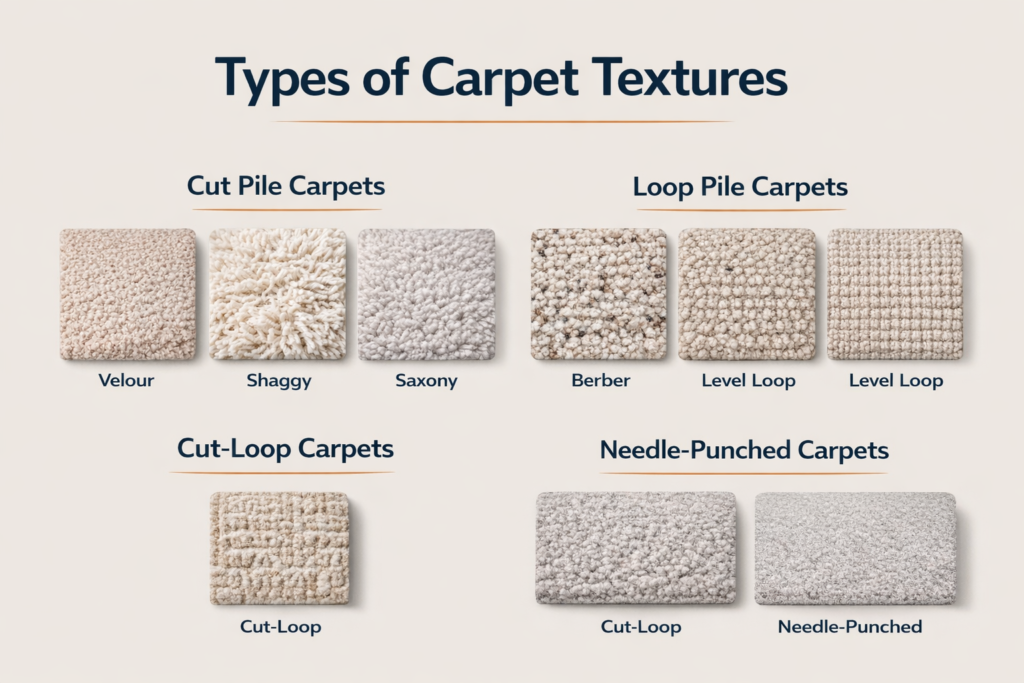
1. Cut Pile Carpets
In cut pile carpets, the yarn loops are cut at the surface, creating a soft, upright fiber finish. This structure gives the carpet a plush and luxurious feel, making it ideal for low-traffic areas.
Best for:
- Bedrooms
- Living rooms
- Formal sitting areas
- Spaces where comfort is a priority
Popular Cut Pile Styles:
Velour (Plush / Velvet)
- Dense, smooth, and elegant appearance
- Extremely soft underfoot
- Ideal for luxury interiors
- May show footprints and vacuum marks
Shaggy (High Pile)
- Long, thick fibers
- Deep, cozy feel
- Great for decorative and relaxed spaces
- Requires more maintenance due to long fibers
Saxony / Textured Cut Pile
- Twisted fibers for added durability
- Slightly more resistant to crushing than pure velour
Pros:
- Softer and warmer
- Luxurious look
- Excellent sound absorption
Cons:
- Shows footprints and furniture marks
- Slightly more challenging to clean
- Less resistant to heavy wear
2. Loop Pile Carpets
In loop pile carpets, the yarn loops remain uncut. This construction makes the carpet highly resistant to crushing, matting, and wear.
Best for:
- Hallways
- Offices
- Commercial spaces
- High-traffic residential areas
Popular Loop Pile Styles:
Berber
- Large, chunky loops
- Very durable
- Often features flecked or multi-tone patterns to hide dirt
- Ideal for busy households
Level Loop
- Small, uniform loops
- Clean, modern look
- Excellent for offices and minimalist interiors
Pros:
- Extremely durable
- Resists wear and crushing
- Hides dirt and footprints better
Cons:
- Less soft compared to cut pile
- Can snag if exposed to pets with sharp claws
3. Cut-Loop Carpets
A hybrid of both cut and loop fibers, this texture creates sculpted, dimensional patterns.
Best for:
- Decorative interiors
- Statement flooring
- Modern residential spaces
Advantages:
- Adds visual interest
- Good balance between softness and durability
- Hides wear better than plush cut pile
4. Needle-Punched (Felt) Carpets
Needle-punched carpets are made by mechanically compressing fibers together rather than weaving or tufting them.
Features:
- Dense, flat surface
- No visible pile
- Extremely durable
- Budget-friendly
Common Uses:
- Exhibition floors
- Offices
- Temporary installations
- Utility areas
These carpets are known for practicality rather than luxury.
Key Considerations When Choosing Carpet Texture
1. Foot Traffic
- High traffic areas → Loop pile or Berber
- Low traffic areas → Cut pile or plush
2. Maintenance
- Cut pile shows footprints more easily
- Loop pile hides dirt better
- Shaggy requires more frequent vacuuming
3. Fiber Material Matters
The fiber type significantly impacts durability, stain resistance, and overall performance:
- Nylon (Polyamide) – Highly durable, resilient, excellent for heavy traffic
- Polypropylene (Olefin) – Moisture resistant, budget-friendly, good for basements
- Acrylic – Wool-like softness with moderate durability
- Polyester – Soft and colorfast, but less resilient than nylon
Final Recommendation for Homeowners
If comfort is your priority, choose Cut Pile.
If durability and low maintenance matter more, choose Loop Pile.
For balanced performance and decorative appeal, consider Cut-Loop.
Understanding carpet texture helps you make a smarter flooring decision — one that fits both your lifestyle and your design vision.
Product | Features | View | |
|---|---|---|---|
 | Area Rug-Living room |
| |
 | Area Rug-Living room |
|
Leave a Reply