
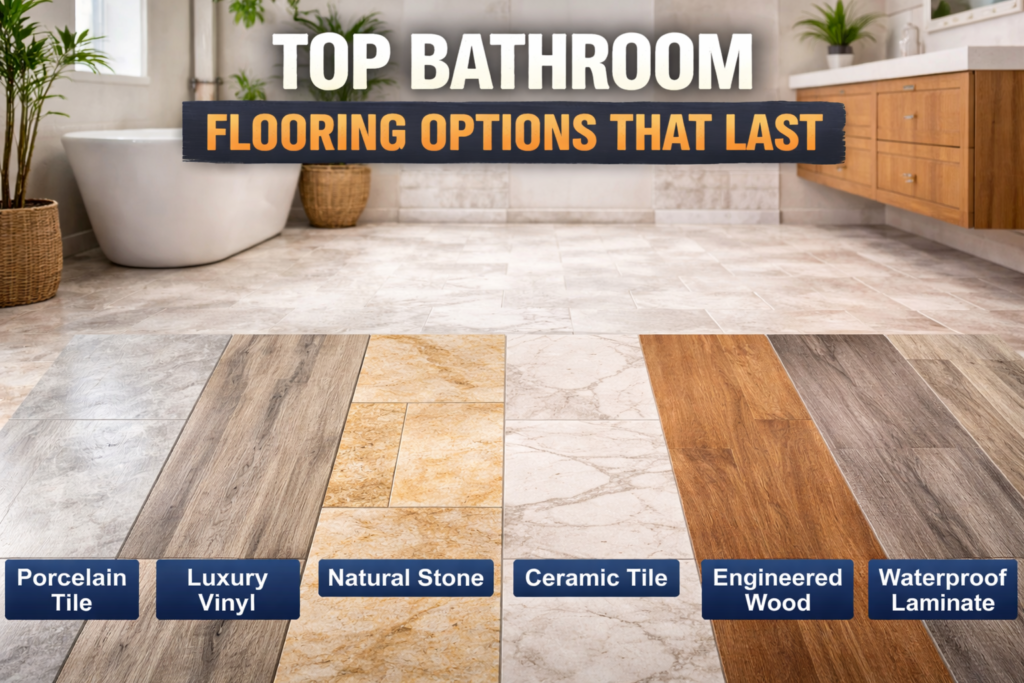
Bathrooms are one of the toughest environments in any home. Between constant moisture, temperature changes, and daily traffic, the floor takes a lot more abuse than people expect. And if the wrong material is installed, problems show up quickly. Warping, staining, mold, or even structural damage can happen within a short time.
I have seen homeowners invest heavily in beautiful bathroom designs, only to deal with flooring issues within a year. The good news is that with the right choice, you can install flooring that not only looks good but holds up for years without constant maintenance.
In this guide, I will walk you through the top bathroom flooring options that actually last, based on real use, feedback from homeowners and installers, and practical performance in everyday conditions.
To see more post related tot he flooring hardscape check this page HERE.
What Makes Bathroom Flooring Durable
Before looking at specific materials, it helps to understand what durability really means in a bathroom.
Key factors:
- Water resistance: The most important factor
- Slip resistance: Safety matters in wet areas
- Stain resistance: Especially around sinks and toilets
- Dimensional stability: The ability to resist expansion and warping
- Maintenance requirements: Some materials need more care than others
If a flooring option fails in any of these areas, it will likely not last long.
Best Bathroom Flooring Options That Last
1. Porcelain Tile
Porcelain tile is one of the most reliable and widely used options for bathrooms.
It is dense, non porous, and highly resistant to water and wear.
Pros and Cons
| Pros | Cons |
|---|---|
| Excellent water resistance | Cold underfoot |
| Extremely durable | Can be slippery if polished |
| Low maintenance | Installation requires skill |
| Wide variety of styles |
Real User Feedback
Homeowners consistently report long term durability with porcelain tile. Many say it still looks new after years of use. The main complaints are about cold surfaces and occasional slipperiness, which can be managed with textured finishes or rugs.
Porcelain |
|---|
 |
2. Ceramic Tile
Ceramic tile is similar to porcelain but slightly less dense and often more affordable.
Pros and Cons
| Pros | Cons |
|---|---|
| Budget friendly | Less durable than porcelain |
| Easy to install | Can chip more easily |
| Water resistant | |
| Wide design options |
Real User Feedback
Users like ceramic tile for its affordability and style options. Some mention minor chipping over time, especially in high traffic bathrooms. Still, for many households, it performs well when installed correctly.
Ceramic |
|---|
 |
3. Luxury Vinyl Plank and Tile
Luxury vinyl has become one of the most popular modern options for bathrooms.
It is fully waterproof and softer underfoot compared to tile.
Pros and Cons
| Pros | Cons |
|---|---|
| Waterproof construction | Can feel less premium |
| Comfortable and warm | May fade over time |
| Easy installation | |
| Good slip resistance |
Real User Feedback
Many homeowners appreciate how comfortable vinyl feels compared to tile. It is often mentioned as a great option for families. Some users note that lower quality vinyl can show wear over time, so product quality matters.
Vinyl |
|---|
 |
4. Natural Stone
Stone options like marble, slate, and granite bring a high end look to bathrooms.
Pros and Cons
| Pros | Cons |
|---|---|
| Unique natural appearance | Requires sealing |
| Long lasting when maintained | Higher cost |
| Strong and durable | Can be slippery |
| Adds property value |
Real User Feedback
Users love the look of natural stone, especially in upscale bathrooms. However, many mention maintenance as a key factor. Without proper sealing, staining and moisture issues can develop.
Natural Stone |
|---|
 |
5. Engineered Wood (Water Resistant Types)
Traditional wood is not ideal for bathrooms, but engineered options with water resistance can work in controlled environments.
Pros and Cons
| Pros | Cons |
|---|---|
| Warm and natural look | Sensitive to standing water |
| More stable than solid wood | Requires careful installation |
| Comfortable underfoot | |
| Unique aesthetic |
Real User Feedback
Some homeowners choose engineered wood for design reasons and report good results when moisture is controlled. However, most agree it is not the safest option for high moisture bathrooms.
Engineered Wood |
|---|
 |
6. Waterproof Laminate
Modern laminate flooring has improved significantly, with some versions designed for wet areas.
Pros and Cons
| Pros | Cons |
|---|---|
| Affordable | Not fully waterproof in all cases |
| Easy to install | Can swell if water seeps in |
| Realistic wood look | |
| Comfortable surface |
Real User Feedback
Users like laminate for its price and appearance. However, many emphasize choosing waterproof versions. Older or lower quality laminate often fails in bathrooms due to moisture exposure.
How to Install Bathroom Flooring for Long Term Performance
Even the best material can fail if installation is poor.
Key steps:
- Prepare the subfloor properly
Ensure it is clean, dry, and level. - Use waterproof underlayment if needed
This adds an extra layer of protection. - Seal edges and joints
Prevent water from seeping underneath. - Follow manufacturer guidelines
Each material has specific requirements. - Allow proper curing time
Especially for tile adhesives and grout.
Buying Guide: Choosing the Right Bathroom Flooring
Consider moisture exposure
Full bathrooms with showers need more water resistant materials than half bathrooms.
Think about comfort
Tile is durable but can be cold. Vinyl offers a softer feel.
Budget
Porcelain and stone cost more but last longer. Vinyl and laminate are more budget friendly.
Maintenance level
If you prefer low maintenance, avoid materials that require sealing.
Style preference
Choose something that fits your overall design while still meeting performance needs.
Common Mistakes to Avoid
- Choosing flooring based only on appearance
- Ignoring water resistance ratings
- Skipping proper sealing
- Poor installation practices
- Using non bathroom rated materials
Keyword Strategy Used
Primary keyword:
- bathroom flooring options that last
Secondary keywords:
- best bathroom flooring
- waterproof bathroom flooring
- durable bathroom floors
- long lasting bathroom materials
- bathroom tile vs vinyl
These keywords are integrated naturally based on search intent and content gaps.
Final Thoughts
Bathroom flooring is one of those decisions where cutting corners rarely works out. The environment is simply too demanding for weak materials.
If you want something that lasts, porcelain tile and high quality vinyl are the most reliable options for most homes. Natural stone can also perform well if you are willing to maintain it properly.
At the end of the day, the best flooring is the one that fits your lifestyle, handles moisture effectively, and holds up over time without constant repairs.
Disclaimer
This content is based on information from various sources and represents recommendations according to available data. Quality and correctness of products are the responsibility of manufacturers and sellers.
Leave a Reply