
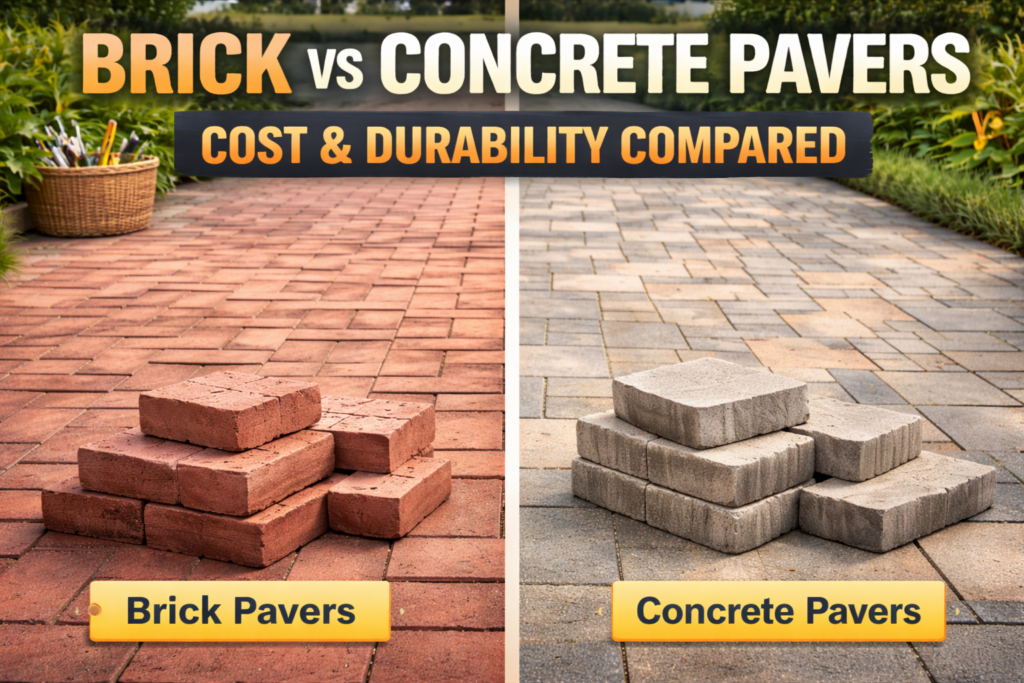
If you are planning a patio, driveway, or walkway, one of the first decisions you will face is choosing between brick and concrete pavers. At first glance, they can look similar. But once you start digging into cost, durability, and long term performance, the differences become very real.
I have seen projects where the wrong choice led to fading, cracking, or unexpected maintenance within a couple of years. On the other hand, I have also seen installations that still look solid after a decade with minimal upkeep.
So this is not just about looks. It is about understanding what each material actually offers in real conditions.
In this guide, we will break down brick vs concrete pavers in terms of cost, durability, real user feedback, and practical use so you can make a confident decision.
if you like to see more post related to paver see this page HERE.
Quick Overview: Brick vs Concrete Pavers
Before going deep, here is a simple way to think about it:
- Brick pavers are made from natural clay and known for their classic look and color stability
- Concrete pavers are manufactured using cement and aggregates, offering more design flexibility
Both can perform well, but they behave differently over time.
Cost Comparison: What You Really Pay
Cost is often the deciding factor, but it is not just about upfront price.
Brick Pavers Cost
- Material cost is generally higher
- Installation cost is similar to concrete
- Longer lifespan can offset initial cost
Concrete Pavers Cost
- More affordable upfront
- Wide price range depending on style
- Potential long term maintenance costs
Typical Price Range (General Estimate)
- Brick pavers: mid to high range
- Concrete pavers: low to mid range
Pros and Cons Comparison Table
| Feature | Brick Pavers | Concrete Pavers |
|---|---|---|
| Initial Cost | Higher | Lower |
| Long Term Value | Strong | Moderate |
| Maintenance Cost | Low | Medium |
| Replacement Cost | Moderate | Lower |
Durability Comparison: Which One Lasts Longer
Durability is where things get interesting.
Brick Pavers Durability
Brick is known for its ability to hold color and resist fading. Because the color runs through the material, it does not wear off like surface coatings.
It also handles foot traffic very well.
Concrete Pavers Durability
Concrete pavers are strong, but their color is often applied to the surface. Over time, exposure to sun and weather can cause fading.
They can also be more prone to surface wear.
Pros and Cons Table
| Pros of Brick | Cons of Brick |
|---|---|
| Long lasting color | Higher upfront cost |
| Strong material | Limited design options |
| Resistant to fading |
| Pros of Concrete | Cons of Concrete |
|---|---|
| High strength | Color fading over time |
| Wide design variety | May require sealing |
| More affordable |
Brick Sealer |
|---|
 |
Real User Feedback and Experience
Looking at real world feedback gives a clearer picture than specifications alone.
What users say about brick pavers
Many homeowners mention that brick pavers maintain their appearance for years. One common observation is that even older installations still look consistent in color.
Some users also like how brick develops a slightly aged look over time rather than looking worn out.
However, a few mention moss or staining in shaded areas, especially in humid climates.
What users say about concrete pavers
Concrete pavers are often praised for their design flexibility. Users like the variety of colors, shapes, and textures available.
However, fading is one of the most commonly mentioned issues. Some users report noticeable color changes after a few years, especially in areas with strong sunlight.
There are also mentions of surface wear in high traffic areas.
Brick Sealer |
|---|
 |
Installation Differences
Both brick and concrete pavers are installed in a similar way, but there are small differences that matter.
Basic installation steps
- Prepare and compact the base
- Add a layer of sand
- Lay the pavers in pattern
- Fill joints with sand
- Compact and seal if needed
Key difference
Concrete pavers often require sealing to maintain color, while brick pavers usually do not.
Maintenance Comparison
Maintenance is where long term cost becomes more visible.
Brick Pavers Maintenance
- Occasional cleaning
- Weed control between joints
- Minimal sealing required
Concrete Pavers Maintenance
- Regular sealing to maintain color
- Cleaning and joint sand replacement
- More attention to surface wear
Pros and Cons Table
| Maintenance Aspect | Brick | Concrete |
|---|---|---|
| Cleaning | Easy | Easy |
| Sealing | Rarely needed | Often needed |
| Long Term Care | Low | Moderate |
Climate Considerations
Your location plays a big role in performance.
In hot climates like South Florida
- Brick handles heat well and retains color
- Concrete may fade faster under strong sun
In wet environments
- Both perform well if installed properly
- Proper drainage is critical
Buying Guide: How to Choose Between Brick and Concrete
Choose brick pavers if:
- You want long lasting color
- You prefer a classic, natural look
- You are willing to pay more upfront for durability
Choose concrete pavers if:
- You want design flexibility
- You are working within a tighter budget
- You do not mind occasional maintenance
Common Mistakes to Avoid
- Choosing based only on price
- Ignoring long term maintenance
- Poor installation practices
- Not considering climate impact
- Skipping sealing for concrete pavers
Final Thoughts
Both brick and concrete pavers can be great choices, but they serve slightly different priorities.
If durability and long term appearance matter most, brick pavers tend to have the edge. They age better and require less maintenance over time.
If flexibility and budget are your main concerns, concrete pavers offer more options and lower initial cost, but they may need more attention in the long run.
The best choice comes down to how you balance cost, maintenance, and appearance for your specific project.
Disclaimer
This content is based on information from various sources and represents recommendations according to available data. Quality and correctness of products are the responsibility of manufacturers and sellers.
Leave a Reply