
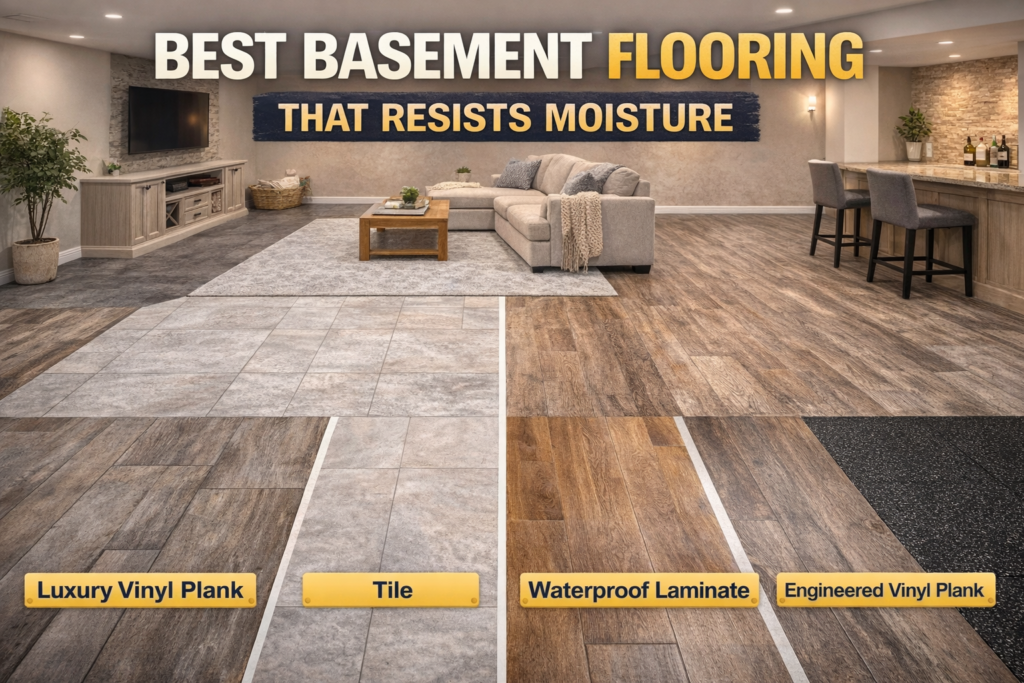
Basements are tricky. They are not like any other part of your home. Even when they look dry, there is always some level of moisture present. It can come from the ground, humidity in the air, or small leaks you may not even notice right away.
I have seen many homeowners install beautiful flooring in their basement, only to replace it within a year because of warping, mold, or damage. Most of the time, the issue is not the installation. It is simply choosing the wrong material.
If you want your basement flooring to last, moisture resistance is not optional. It is the main factor.
In this guide, I will walk you through the best basement flooring options that actually resist moisture, based on real world performance, user feedback, and long term durability.
To see more post on interiors you can check the following page HERE.
Why Moisture Is a Big Problem in Basements
Before choosing flooring, it helps to understand what you are dealing with.
Common moisture sources:
- Ground vapor coming through concrete
- High humidity levels
- Occasional water leaks or flooding
- Poor ventilation
Even a small amount of moisture can damage traditional flooring materials over time.
Best Basement Flooring Options That Resist Moisture
1. Luxury Vinyl Plank (LVP)
This is one of the most recommended options today for basements.
It is fully waterproof and designed to handle moisture without swelling or warping.
Pros and Cons
| Pros | Cons |
|---|---|
| Completely waterproof | Can feel less natural than wood |
| Comfortable underfoot | Lower quality options wear faster |
| Easy to install | |
| Wide range of designs |
Real User Feedback
Many homeowners say LVP is the safest choice for basements. It handles moisture well and still looks like wood. Some users mention that cheaper versions can scratch or wear over time, so quality matters.
Vinyl |
|---|
 |
2. Porcelain or Ceramic Tile
Tile is one of the most durable and moisture resistant options available.
Pros and Cons
| Pros | Cons |
|---|---|
| Highly water resistant | Cold surface |
| Extremely durable | Hard underfoot |
| Long lifespan | Installation cost higher |
| Mold resistant |
Real User Feedback
Users often mention that tile performs perfectly in basements with moisture concerns. The biggest complaint is comfort, especially in colder climates, where the floor can feel cold without rugs.
Porcelain |
|---|
 |
3. Waterproof Laminate
Modern waterproof laminate has improved significantly compared to older versions.
Pros and Cons
| Pros | Cons |
|---|---|
| More affordable | Not fully waterproof in all cases |
| Easy installation | Can fail if water sits too long |
| Good appearance | |
| Comfortable feel |
Real User Feedback
Users like the look and price of laminate, but many stress the importance of choosing waterproof versions. Regular laminate still struggles with moisture and can swell.
4. Epoxy Coating
Epoxy is not a traditional flooring, but it is a strong moisture resistant solution.
Pros and Cons
| Pros | Cons |
|---|---|
| Completely waterproof | Hard surface |
| Seamless finish | Limited design styles |
| Easy to clean | |
| Very durable |
Real User Feedback
Homeowners with utility basements or modern designs often choose epoxy. It holds up very well against moisture, but some mention it feels too industrial for living spaces.
Epoxy Coating |
|---|
 |
5. Rubber Flooring
Rubber flooring is often used in gyms or utility spaces but works well in basements.
Pros and Cons
| Pros | Cons |
|---|---|
| Water resistant | Limited style options |
| Soft and comfortable | Can have odor initially |
| Slip resistant | |
| Durable |
Real User Feedback
Users appreciate rubber flooring for functional spaces like home gyms. It handles moisture well, but most people do not prefer it for living areas.
How to Install Basement Flooring Properly
Even the best flooring will fail if installed incorrectly.
Key steps:
- Check moisture levels first
Use a moisture test on the concrete. - Use a vapor barrier if needed
This adds protection against ground moisture. - Prepare the subfloor
Clean, level, and dry before installation. - Choose proper underlayment
Especially for vinyl or laminate. - Allow expansion gaps
Prevents buckling over time.
Buying Guide: How to Choose the Right Option
Consider moisture level
If your basement has high moisture, go with fully waterproof options like vinyl or tile.
Think about comfort
Tile and epoxy are durable but hard. Vinyl offers a softer feel.
Budget
Vinyl and laminate are more affordable, while tile may cost more upfront.
Usage
Living space, storage, or gym areas all require different flooring types.
Common Mistakes to Avoid
- Installing wood flooring in basements
- Skipping moisture testing
- Using non waterproof materials
- Poor subfloor preparation
- Ignoring ventilation issues
Final Thoughts
Basement flooring is not about picking what looks best. It is about choosing what survives.
If you want a safe and reliable option, luxury vinyl plank is often the best balance of durability, comfort, and cost. Tile is the most durable, while epoxy and rubber serve more specific needs.
The key is understanding your basement conditions and choosing a material that handles moisture without failing over time.
Disclaimer
This content is based on information from various sources and represents recommendations according to available data. Quality and correctness of products are the responsibility of manufacturers and sellers.
Leave a Reply